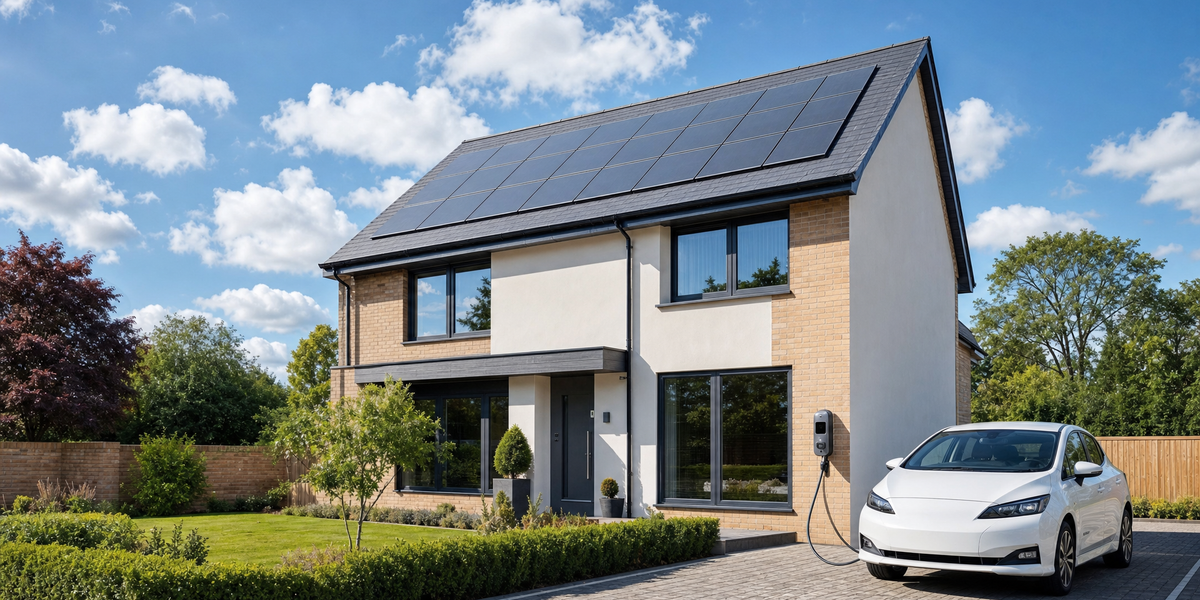
Charging Your Electric Vehicle with Solar Panels
If you own an electric vehicle and already have solar panels on your roof, or you're thinking about getting both, you're in a strong position. Pairing an EV charger with solar panels at home in the UK means you can use the electricity your roof generates to power your car, slashing your fuel costs and making the most of every kilowatt-hour your system produces. For homeowners along the South Coast, where sunshine levels are consistently above the UK average, this combination makes a great deal of practical and financial sense.
Why the South Coast Is Ideal for Solar-Powered EV Charging
Bournemouth and the wider South Coast consistently record some of the highest sunshine hours in England. According to Met Office climate data, the south coast of England averages around 1,750 to 1,900 hours of sunshine per year, which is significantly more than the UK average of roughly 1,400 hours. That extra solar resource matters enormously when you're trying to generate enough power to run both your home and charge a car.
A typical electric vehicle might need 15 to 20 kWh to cover 60 to 80 miles of driving. A well-maintained 4 kWp solar panel system in Dorset or Hampshire can generate 3,500 kWh or more per year. On a clear summer day, that same system could produce 20 kWh or above, enough to fully top up most EVs without drawing a single unit from the grid.
As we've covered in detail at why Bournemouth is one of the best places in the UK for solar, the geography and climate of this part of England genuinely give homeowners an advantage that shouldn't be taken for granted.
How EV Charger Solar Panels Work Together at Home in the UK
The basic principle is straightforward. Your solar panels generate DC electricity, which your inverter converts to AC electricity for use in the home. When you plug in your EV with a standard home charger, it draws from whatever electricity is available, whether that's from the panels, the grid, or both, depending on the time of day and how much your system is generating.
The smarter approach is to use a solar-compatible EV charger. These devices communicate with your inverter or energy management system and actively prioritise solar generation. When the sun is shining and the panels are producing more than the house needs, the surplus is directed to the car rather than exported to the grid at a low rate.
This is a meaningful upgrade over a basic EV charger. Without solar integration, your car simply draws from whatever source is cheapest or available. With it, you can genuinely run your vehicle on sunshine, or as close to it as the British weather allows.
What Equipment Do You Actually Need?
The setup requires a few components working together. You'll need your solar panel array, obviously, along with a compatible inverter. Many modern hybrid inverters already support EV charging integration, but older systems may need an additional energy management unit to bridge the gap.
For the charger itself, look for a unit that offers solar-divert or eco-charging modes. Several manufacturers produce chargers designed specifically for this purpose, and MCS-certified installers can advise on which models are compatible with your existing solar setup. Having an MCS-certified professional handle the installation matters, not just for warranty reasons but because it affects your eligibility for certain incentives.
A home battery is optional but valuable. Adding battery storage means you can bank excess solar generation during the day and use it to charge your car in the evening, when many people actually plug in. We've written about this in more depth in our article on solar battery storage and whether it's worth it for South Coast homeowners, which is worth reading if you're weighing up the costs.
Getting the Most from the Smart Export Guarantee
If your panels are generating more than you can use, even after charging the car, any surplus exported to the grid earns you a payment under the Smart Export Guarantee, overseen by Ofgem. Export rates vary between suppliers, so it pays to shop around.
The practical implication for EV owners is that you should try to use as much solar generation as possible within the home before exporting. Charging your car during peak generation hours, typically between 10am and 3pm on clear days, is the most effective way to do this. That's easier if you work from home or have flexibility over when you plug in, but smart chargers can be scheduled remotely via an app, which removes the need to be physically present.
For those already earning under the older Feed-in Tariff scheme, the principles are slightly different. You can read more about protecting those legacy payments in our guide on keeping your Feed-in Tariff system running effectively.
The Role of Solar Panel Condition in EV Charging Performance
This is where many homeowners fall short without realising it. An EV charger and solar panels combination is only as good as the output your panels are actually delivering. Panels that are dirty, degraded, shaded by moss or suffering from a fault can easily lose 20 to 30 percent of their potential output, sometimes more.
On the South Coast, salt air from the sea is a particularly common cause of surface contamination on panels, and it's one that builds up gradually rather than all at once. We've covered this in detail in our piece on how salt air damages solar panels on the South Coast. The short version is that coastal properties need more regular attention than inland ones, and ignoring it costs you generation.
According to the Energy Saving Trust, well-maintained solar panels consistently outperform neglected systems over their lifetime, and the gap widens year on year. If you're relying on your panels to charge an EV, that performance gap translates directly into more grid electricity purchased and higher running costs.
No1 Solar Care's Solar MOT service is designed to catch exactly these kinds of issues before they become expensive. It covers a full inspection of your panels, inverter, wiring, mounting and generation data, giving you a clear picture of how well your system is actually performing versus how well it should be.
Common Problems That Reduce Solar EV Charging Efficiency
Several issues can quietly drain your system's output. Inverter faults are among the most common, and they're not always obvious from the outside. A faulty inverter might still show lights and appear to be working while under-converting your DC generation. Our complete UK troubleshooting guide for inverter problems explains the warning signs in plain language.
Panel degradation is another factor. All solar panels lose a small amount of efficiency each year, typically around 0.5 percent annually for quality panels, though cheaper modules can degrade faster. Over ten years, that adds up. Our article on solar panel degradation rates breaks down what's normal and what's a red flag.
Physical damage from storms is also more of a risk than many people assume. Micro-cracks from hail or storm debris can reduce output significantly without making the panel look visibly broken. If you've had severe weather and noticed a dip in generation, it's worth having a professional inspection carried out rather than assuming everything is fine.
Birds nesting under panels are a surprisingly frequent problem in Dorset and Hampshire, and the damage they cause to wiring and waterproofing can be substantial. You can read more about that specific issue in our guide on birds nesting under solar panels.
Financial Case for Combining Solar and an EV on the South Coast
The numbers make a compelling case. Charging an EV from the grid at average UK electricity rates costs considerably more than using free solar generation. The Solar Energy UK trade body estimates that homeowners with solar panels and EVs can reduce their vehicle running costs by a significant margin compared to grid charging alone, particularly in sunnier regions like the South Coast.
With energy prices remaining elevated following the turbulence of recent years, as covered in our piece on how the 2026 energy price cap affects South Coast solar owners, every unit of solar electricity used to power a car instead of a grid unit is a direct saving.
The key to maximising that financial return is keeping your system in peak condition. Panels running at 80 percent of their rated output because of dirt, shading or a minor fault aren't delivering the savings they should. That's why investing in regular maintenance and occasional professional checks isn't a cost, it's the thing that protects everything else.
If you're not sure whether your system is performing as it should, start with our 60-second solar health check to get an initial sense of where things stand.
Keeping Your System Ready for Year-Round EV Charging
Seasonal variation is real and worth planning for. Winter months on the South Coast produce far less solar generation than summer, so your EV will draw more from the grid between November and February regardless of how well your system performs. That's normal and expected.
What you can control is making sure your system enters each season in good shape. A spring inspection before the main generation season gets underway is particularly valuable, and we've outlined what that involves in our spring solar panel health check guide. Equally, preparing your system before autumn storms arrive is sound practice, as covered in our article on protecting solar panels from extreme UK winter weather.
No1 Solar Care's Solar MOT service is available to homeowners across Bournemouth, Dorset, Hampshire and the wider South Coast. It gives you the kind of thorough, independent assessment that helps you get the most from your investment throughout the year, particularly when you're relying on your panels to power a vehicle as well as a home.
Frequently Asked Questions
Can I charge my EV using solar panels at home in the UK?
Yes, absolutely. Setting up an EV charger with solar panels at home in the UK is a practical and increasingly popular option. You'll need a compatible home charger that supports solar-divert or eco-charging modes, along with a solar system that generates enough surplus to make a meaningful contribution to your charging needs.
How many solar panels do I need to charge an electric vehicle?
It depends on your EV's battery size and how many miles you cover. As a rough guide, a 4 kWp system generating around 3,500 kWh per year in Dorset or Hampshire could realistically provide enough surplus to cover 6,000 to 8,000 miles of EV driving annually, assuming good system performance and daytime charging habits.
Do I need a battery storage system to charge my EV with solar?
Not necessarily, but it helps. Without a battery, you can only charge from solar during daylight hours when your panels are producing surplus electricity. A home battery lets you store daytime generation and use it in the evening, which is when most people actually plug in their vehicles.
Will a solar-powered EV charger affect my Smart Export Guarantee payments?
It can reduce the amount you export, since more generation is being used within the home. That's generally a good thing financially, because the value of electricity you use yourself is higher than the Smart Export Guarantee rate paid for exported units. Self-consumption is usually the better outcome.
How do I know if my solar panels are performing well enough to charge an EV?
Check your inverter's generation data and compare it against expected output for your system size and location. If figures look lower than they should, a professional check is the right next step. Our 60-second solar health check is a good starting point before booking a full inspection.
Does salt air on the South Coast affect solar EV charging performance?
Yes, it can. Coastal properties in Bournemouth, Hampshire and across Dorset are exposed to salt-laden air that deposits a fine residue on panel surfaces over time. This reduces light transmission and cuts output. Regular cleaning and annual professional checks help keep the system generating at its full potential.
How often should I have my solar panels inspected if I'm using them to charge an EV?
Annual inspections are a sensible minimum, and more frequent checks are worthwhile on coastal properties. When your panels are carrying the additional load of powering a vehicle, any underperformance has a bigger financial impact. The Solar MOT service from No1 Solar Care covers everything from panel condition and inverter output to wiring and mounting integrity.
Book your Solar MOT today. Call 01202 023069 or visit no1solarcare.co.uk/solar-mot