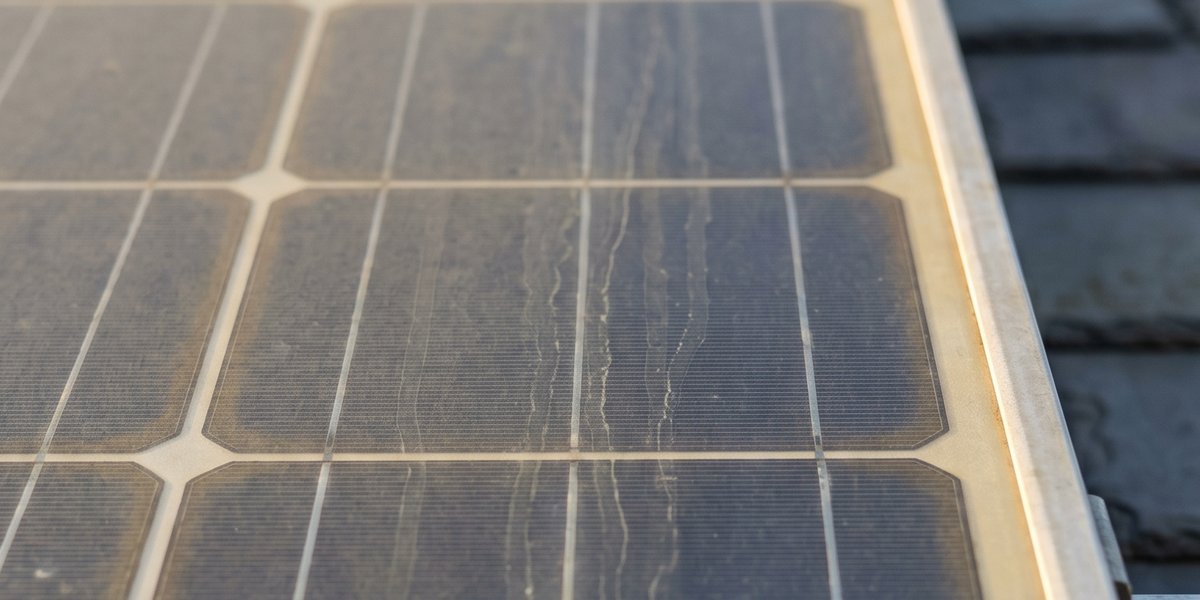
Solar Panel Degradation: How Much Efficiency Do You Really Lose Each Year?
Your solar panels are not performing quite the same as they did the day they were installed. That is not a fault or a failure. It is simply how photovoltaic technology works over time. Understanding the solar panel degradation rate is one of the most practical things you can do as a solar panel owner, because it directly affects how much energy your system produces, how long your payback period really is, and whether any drop in output is normal ageing or something that needs fixing.
What Is Solar Panel Degradation?
Solar panel degradation refers to the gradual decline in a panel's ability to convert sunlight into electricity over its operational life. It happens to every panel, regardless of brand or technology. The cells inside each panel slowly lose efficiency due to a combination of exposure to ultraviolet light, temperature cycling, moisture ingress, and physical stress from wind and weather.
The good news is that modern panels degrade far more slowly than older technology did. According to research widely referenced by Solar Energy UK, the industry trade body for the solar sector, the average annual degradation rate for a quality silicon panel is somewhere between 0.5% and 0.8% per year. Premium manufacturers often cite figures closer to 0.3% to 0.5% per year in their warranty documentation.
To put that in real terms: if your system is generating 4,000 kWh per year when new, at a 0.5% degradation rate it will produce around 3,800 kWh per year by the time it is ten years old. That is a meaningful but manageable reduction, and one that reputable manufacturers account for in their performance warranties.
How Solar Panel Warranties Reflect Degradation
Most quality solar panels come with a linear performance warranty that typically guarantees at least 80% of original output at 25 years and at least 90% at ten years. Some premium panels now offer 92% at 25 years. These figures are not arbitrary. They are based on manufacturers' own testing and are designed to give buyers a realistic picture of long-term output.
The catch is that a warranty only protects you if the degradation is abnormal. Standard age-related decline, even if it costs you money in lost generation, sits within warranty tolerances. This is why it matters to track your system's actual output from day one, so you have a clear baseline to compare against. If your panels are declining faster than the warranty allows, you have grounds to make a claim.
For those with older systems, particularly those installed during the Feed-in Tariff era, it is worth checking what guarantees your original installer provided. Feed-in Tariff systems in 2026 are now well into their operational life and many are approaching the decade mark or beyond. Performance at this stage deserves proper scrutiny.
The Solar Panel Degradation Rate in the UK Climate
How the South Coast Compares
Here in Bournemouth and across the South Coast, panels are exposed to more solar irradiance than in much of the rest of the UK. That is broadly a good thing for generation, but higher UV exposure over a longer annual season does contribute to faster degradation compared to, say, a rooftop system in the north of Scotland.
According to Met Office data, the South Coast receives around 1,750 to 1,900 hours of sunshine annually, among the highest in the UK. More sun means more generation, but it also means more cumulative UV stress on your panels year on year. For Bournemouth and Hampshire homeowners especially, this makes proactive maintenance more important than it might be elsewhere in the country.
Salt Air and Coastal Degradation
Coastal environments introduce an additional factor that inland homeowners rarely need to think about. Salt-laden air carries microscopic particles that settle on panel surfaces and, over time, can corrode aluminium frames, degrade sealants around the junction box, and even etch into anti-reflective coatings. We have written in detail about how salt air damages solar panels on the South Coast and what homeowners can do about it. The short version is that coastal systems need more frequent inspection and cleaning than manufacturers' standard guidance suggests.
Soiling from salt, pollen, bird droppings and general grime also causes what is known as soiling loss. This is separate from true cell degradation but has a similar effect on output, and it compounds degradation losses on top of one another. A panel that has lost 3% to efficiency through degradation and another 5% through soiling is underperforming by 8%, even though only 3% of that is unavoidable.
What Speeds Up Solar Panel Degradation?
Age-related degradation is inevitable, but several factors can push a panel to decline faster than its rated rate.
High temperatures accelerate the chemical processes inside cells. While panels generate electricity from light rather than heat, and actually become less efficient in very high temperatures day to day, sustained thermal cycling, the repeated expansion and contraction of cells as temperatures rise and fall through seasons, creates micro-cracks over time. You can read more about how temperature extremes affect output in our article on whether solar panels work better in a heatwave.
Potential Induced Degradation, often shortened to PID, is another accelerant. It occurs when electrical leakage between the panel cells and the frame causes a gradual and sometimes rapid loss of power. It is more common in systems where the earthing was not correctly set up during installation, and it can cause losses far greater than standard annual degradation if left unchecked.
Physical damage, including micro-cracks caused by hail, storm debris or even heavy-footed installation engineers, creates weak points in the cell structure that degrade faster than undamaged cells. Storm events on the South Coast, which can be significant during winter months, are a genuine risk factor. Our guide to storm damage to solar panels covers what to check for and who to contact if you suspect damage.
Poor installation practice also plays a long-term role. Systems that were not correctly ventilated, or where panels were mounted too close to the roof surface, run hotter than they should and degrade more quickly as a result.
How to Measure Whether Your Panels Are Degrading Normally
The only reliable way to know whether your system is ageing normally is to compare actual output against expected output. Your inverter monitoring system should give you daily, monthly and annual generation figures. If you have had your system for several years and kept records, you can plot a trend.
Bear in mind that year-on-year comparisons need to account for weather variation. A poor summer will naturally reduce annual output, so one low year does not necessarily mean abnormal degradation. A useful approach is to compare the same calendar months across multiple years and look for a consistent downward trend beyond what the degradation rate would predict.
If your system is dropping output faster than 1% per year, or if you notice sudden drops rather than gradual ones, that is a signal to get a professional inspection done. Sudden changes are almost never down to normal degradation. They usually point to a specific fault, whether it is a failing inverter, shading from overgrown trees, or a faulty string of panels.
Our guide to why solar panels stop generating enough power walks through nine of the most common causes, and many of them are entirely fixable.
The Role of Maintenance in Slowing Degradation
You cannot stop degradation entirely, but you can slow its pace and ensure that avoidable losses are not stacking on top of it. Regular professional maintenance makes a genuine difference.
A thorough inspection catches early signs of delamination, discolouration, water ingress and micro-cracking before they worsen. Cleaning removes soiling that would otherwise cut into generation year-round. Electrical testing identifies string faults, PID, and inverter issues that drag down overall system output. The true cost of neglecting solar panels is often much higher than homeowners expect when they add up years of lost generation, missed export payments and the compounding effect of small faults left unaddressed.
At No1 Solar Care, our Solar MOT is specifically designed to give South Coast homeowners a comprehensive picture of their system's condition. We check panel performance, inspect frames and fixings, test the inverter and electrics, and give you a clear written report on what we found and what, if anything, needs attention. If you have never had a professional check done, or if it has been a couple of years since the last one, booking a Solar MOT service is the single most useful thing you can do to protect your system's long-term output.
For those who want to understand what routine maintenance actually involves, our complete guide to solar panel maintenance on the South Coast is a good starting point.
What Degradation Means for Your Finances
For most homeowners, solar panels are a financial investment as much as an environmental one. Degradation affects that investment in two ways: lower self-consumption savings as output declines, and lower export income if you are on the Smart Export Guarantee or a legacy Feed-in Tariff arrangement.
Over a 25-year system life, the difference between a panel degrading at 0.5% per year and one degrading at 1% per year is not trivial. At a 0.5% rate, a system producing 4,000 kWh in year one will produce roughly 3,800 kWh in year ten and around 3,050 kWh in year 25. At a 1% rate, that final-year figure drops to around 2,980 kWh. Across 25 years, the difference in cumulative generation, and therefore in savings and export income, runs to thousands of kilowatt hours.
With energy prices remaining high, as Ofgem continues to adjust the price cap in response to wholesale market pressures, every kilowatt hour your system fails to produce is one you have to buy from the grid. Keeping degradation in check has a direct, measurable effect on what your panels are worth to you each year.
If you are unsure how your current system compares to its original performance, our free 60-second solar health check is a quick way to flag up any obvious concerns before booking a full inspection.
When Degradation Becomes a Repair or Replacement Decision
Most systems will never need early replacement due to degradation alone, provided they were installed correctly and maintained reasonably well. But there are circumstances where degradation combines with other issues to make replacement more cost-effective than repair.
Panels that are severely delaminated, have widespread micro-cracking, or have suffered PID losses that cannot be reversed through remediation, may be operating at 70% or less of original output. At that point, the economics of replacement deserve a serious look, particularly given the improvements in panel efficiency over the past decade. A new panel rated at 400W today is significantly more efficient per square metre than the 250W panels installed in 2012.
Inverter replacement is often the first major decision a system owner faces. Inverters typically have a shorter lifespan than the panels themselves, usually around ten to fifteen years. If your inverter is ageing, our cost-benefit analysis on replacing your solar inverter will help you work out whether the numbers stack up.
For broader context on maintenance costs across the system's life, the solar panel maintenance costs guide for 2026 gives a clear picture of what UK homeowners are typically spending and what represents good value.
The Energy Saving Trust also provides independent guidance on solar system performance and maintenance that is worth consulting if you are weighing up a significant decision about your installation.
Frequently Asked Questions
What is the average solar panel degradation rate in the UK?
Most quality solar panels degrade at a rate of between 0.5% and 0.8% per year. Premium panels from reputable manufacturers can perform better than this, closer to 0.3% per year. This means a well-maintained system will typically retain around 80% to 85% of its original output after 25 years of operation.
Can I slow down the degradation of my solar panels?
You cannot stop degradation entirely, but regular professional maintenance slows the process meaningfully. Keeping panels clean reduces soiling losses, while routine electrical checks catch issues like Potential Induced Degradation early. A professional inspection once a year or every two years makes a real difference to long-term output.
Do coastal locations like Bournemouth cause faster solar panel degradation?
Coastal areas like Bournemouth and the wider South Coast present specific challenges including salt air corrosion, higher UV exposure, and wind-driven debris. These factors can accelerate frame corrosion and surface soiling faster than inland locations, making more frequent inspection and cleaning advisable for Dorset and Hampshire homeowners.
How do I know if my panels are degrading faster than they should be?
Compare your annual generation figures year on year using your inverter monitoring data. If output is falling faster than around 1% per year, or you see a sudden drop rather than a gradual trend, something beyond normal degradation is likely at play. Faults such as inverter issues, shading or micro-cracks are common causes worth investigating.
Does solar panel degradation affect my Smart Export Guarantee payments?
Yes, indirectly. As panels produce less electricity over time, there is less surplus to export to the grid, which means lower Smart Export Guarantee income. Keeping your system performing as close to its rated output as possible, through maintenance and prompt fault repairs, protects both your self-consumption savings and your export earnings.
At what point should I consider replacing degraded solar panels?
Replacement generally makes sense when panels are operating below 70% of original output, particularly if that decline is combined with physical damage or irreversible electrical faults. Given how much panel efficiency has improved in recent years, newer panels installed on the same roof can significantly outperform ageing ones even when accounting for replacement costs.
How does the Solar MOT help with solar panel degradation?
The Solar MOT service provides a thorough assessment of your system's current condition, covering panel performance, electrical testing, inverter health, and physical inspection of frames and fixings. It gives you a clear picture of whether your system is degrading normally or whether specific issues are accelerating decline, so you can make informed decisions about maintenance or repairs.
Book your Solar MOT today. Call 01202 023069 or visit no1solarcare.co.uk/solar-mot