Why Are My Solar Panels Not Generating Enough Power? 9 Common Causes
If you've been watching your energy bills creep back up or noticed your solar generation figures looking lower than usual, you're probably asking yourself: why are my solar panels not generating enough power? It's one of the most common questions we hear from homeowners across the South Coast, and the good news is that in the vast majority of cases, there's a clear and fixable cause. Solar panels are built to last, but they do need attention from time to time. This article walks you through nine of the most common reasons your system might be underperforming, so you know exactly what to look for and when to call in a professional.
1. Dirty or Soiled Panels
This is the number one culprit, and it's more significant than most people realise. A layer of grime, bird droppings, moss, or general atmospheric pollution sitting on your panels acts as a physical barrier between the sun and your solar cells. Studies have shown that heavily soiled panels can lose anywhere between 15% and 25% of their generating capacity, and in coastal areas like Bournemouth and Dorset, salt deposits and seagull activity make this an even bigger issue.
The problem with dirt is that it builds up gradually, so you don't notice it happening. One day you're generating just fine, and six months later you're down significantly without ever having seen a dramatic drop. Regular professional cleaning is the simplest and most cost-effective way to keep your panels at full output.
2. Shading That Wasn't There Before
Shading is a surprisingly misunderstood issue. Solar panels can be affected by even partial shading, and the way most systems are wired means that one shaded panel can drag down the output of others connected in the same string. A single branch or a newly installed satellite dish casting a shadow across part of your roof can cause a disproportionate drop in total system output.
This is worth thinking about if your system has been running well for years and has recently started underperforming without any obvious explanation. Trees grow. Neighbouring properties get extensions or new outbuildings. Even a TV aerial that's shifted position after a storm can cause problems. If shading is the issue, a solar technician can assess whether optimisers or microinverters might help mitigate the impact.
3. Inverter Faults or Failures
Your inverter is the piece of kit that converts the DC electricity your panels generate into AC electricity that your home can actually use. When it's working properly, you barely think about it. When it's struggling, your whole system suffers.
Inverters typically have a lifespan of around 10 to 15 years, which is shorter than the 25-plus year lifespan of the panels themselves. If your system is more than a decade old, your inverter could be the weak link. Signs of inverter trouble include error codes on the display, unusual humming noises, or the unit switching off and restarting repeatedly. A qualified engineer can diagnose inverter faults quickly and advise whether a repair or replacement is the right call.
4. Faulty or Degraded Wiring and Connections
Solar panels spend their entire lives exposed to the elements. Over time, UV exposure, thermal cycling from heating and cooling, wind movement, and moisture can all take a toll on the wiring and electrical connections in your system. Loose connections, corroded terminals, or damaged cables create resistance in the circuit, and resistance means lost energy.
Wiring faults can be difficult to spot visually, especially if they're underneath the panels or within junction boxes. This is one of the reasons a proper technical inspection is so valuable. Our Solar MOT at No1 Solar Care includes a thorough electrical check covering wiring, connections, and all key components across your system, giving you a clear picture of what's going on under the surface.
5. Panel Degradation Over Time
Solar panels don't last forever at their original efficiency. Most quality panels degrade at a rate of around 0.5% to 0.8% per year, which means a system that's been running for 15 years could be producing 10% to 12% less than it did when first installed. That's completely normal and expected, but it does mean older systems need more careful monitoring.
In some cases, degradation happens faster than expected due to poor-quality panels, extreme weather events, or manufacturing defects. If your system is ageing and you haven't had it checked recently, it's worth getting a professional assessment to understand whether what you're seeing is natural degradation or something more serious that can be addressed.
6. Microcracks or Physical Damage to the Panels
Microcracks in solar cells are often invisible to the naked eye but can have a meaningful impact on performance. They typically develop from thermal stress, hail, falling debris, or even being walked on during installation or maintenance. A panel with microcracks may still look perfectly normal from the ground while producing measurably less electricity than it should.
More obvious physical damage from storms, falling branches, or impact can also reduce output. Along the Hampshire and Dorset coast, where weather can be unpredictable and storms are not uncommon, it's worth having your panels visually inspected after any significant weather event. Thermal imaging, which we carry out as part of our Solar MOT, can reveal hotspots and cracked cells that aren't visible in a standard visual check.
7. Incorrect System Monitoring or Meter Issues
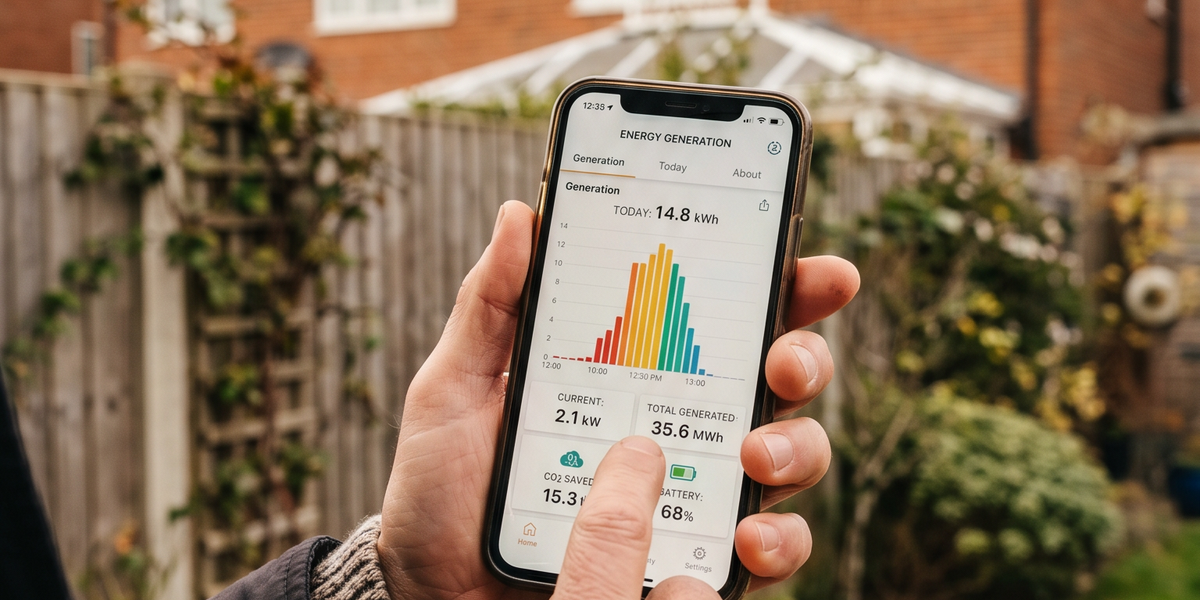
Sometimes the panels themselves are fine, but the data you're looking at isn't accurate. Generation meters can develop faults, monitoring software can lose its connection, and some older systems have no monitoring at all, making it hard to know what's normal and what isn't.
If your monitoring system is showing unusually low figures but your bills haven't obviously increased, it's possible the fault is with the meter or data connection rather than the panels. A technician can cross-reference actual output figures against what your system should theoretically be generating for your roof size, orientation, and location, giving you a much more reliable baseline. Our free 60-second solar health check is a useful starting point if you're not sure where to begin.
8. Poor Original Installation
Not every solar installation is done to the same standard. A system that wasn't sized correctly for your roof and energy needs, installed with substandard components, or commissioned without proper testing can underperform from day one. In some cases, homeowners have lived with a poorly performing system for years without realising it because they had nothing to compare it against.
If you bought a property with solar panels already installed, or had your system installed by a company that's since gone out of business, it's particularly worth getting an independent assessment. We work with homeowners across Bournemouth, Dorset, and the wider South Coast who have inherited or been left with systems they don't fully understand, and in many cases we can identify and fix issues that have been quietly draining performance for years. Wherever possible, look for installers and inspectors who are MCS certified to ensure work is carried out to recognised industry standards.
9. Extreme Heat Reducing Efficiency
This one surprises people. Solar panels actually perform less efficiently in very high temperatures. They're tested under standard conditions at 25 degrees Celsius, and their output drops as temperatures rise above that. During a prolonged hot spell, you might notice your panels generating less on a scorching afternoon than they do on a bright but cooler spring day.
This is a natural physical characteristic of photovoltaic technology rather than a fault, but it's worth understanding so you can interpret your generation data correctly. If your panels are running particularly hot due to poor ventilation beneath them or because they're mounted flat against a very dark roof, there may be steps that can improve their thermal performance.
When to Call a Professional
If you've been asking why are my solar panels not generating enough and you can't identify an obvious cause, the most sensible step is a professional inspection. Trying to diagnose electrical faults or panel damage without the right tools and training isn't just ineffective, it can be genuinely dangerous.
At No1 Solar Care, we offer a comprehensive Solar MOT that covers everything from physical panel inspection and thermal imaging to electrical testing, inverter assessment, and a full written report with recommendations. We serve homeowners and businesses across Bournemouth, Dorset, Hampshire, and the wider South Coast, and we carry out every inspection to a high technical standard.
A Solar MOT gives you documented evidence of the condition of your system, which is also useful if you're selling your home or making a warranty claim with your installer or panel manufacturer.
Frequently Asked Questions
Why are my solar panels not generating enough power on sunny days?
Even on sunny days, performance can be reduced by dirty panels, partial shading, inverter issues, or high temperatures affecting cell efficiency. If you're consistently seeing lower output than expected despite clear skies, it's worth having a professional check your system for faults or degradation that may not be immediately obvious.
How much does a solar panel inspection cost?
No1 Solar Care's Solar MOT covers a full physical inspection, thermal imaging, electrical testing, and a written report. Given that a poorly performing system could be costing you hundreds of pounds a year in lost generation, the inspection typically pays for itself very quickly through the improvements it helps identify.
Can bird droppings really reduce solar panel output?
Yes, significantly. A concentrated patch of bird droppings can block cells completely and in a string-wired system can drag down the output of nearby panels too. Properties along the South Coast and in coastal parts of Dorset and Hampshire are particularly affected due to heavy seagull activity. Regular professional cleaning is the most effective solution.
How do I know if my inverter is faulty?
Common signs include error messages or warning lights on the inverter display, the unit switching off and on repeatedly, unusual noises, or a noticeable drop in generation with no other obvious cause. Inverters typically last 10 to 15 years, so older systems are more at risk. A qualified engineer can carry out a full diagnostic test to confirm whether the inverter is the problem. If you're unsure, our free 60-second solar health check can help you decide whether a professional visit is worthwhile.
Is it normal for solar panels to produce less in winter?
Absolutely. Shorter days and lower sun angles mean reduced generation from October through to February across the South Coast. Typical winter output can be 50% to 70% lower than peak summer figures. What isn't normal is a sharp, unexpected drop compared to the same period in previous years, which usually points to a fault rather than seasonal variation.
How long do solar panels last?
Most quality solar panels carry a 25-year performance warranty and can remain functional beyond that, though output gradually declines over time. The inverter typically needs replacing after 10 to 15 years. Regular maintenance and inspections extend the life of your whole system and help you get the maximum return on your original investment.
Do I need to clean my solar panels myself?
It's generally not recommended to clean your own panels, particularly on sloped roofs, due to the safety risks involved. Professional cleaning also tends to produce better results, as specialists use the right equipment and pure water systems that don't leave mineral deposits behind. No1 Solar Care provides professional care across Bournemouth, Dorset, and Hampshire as part of our maintenance services.
Book your Solar MOT today. Call 01202 023069 or visit no1solarcare.co.uk/solar-mot