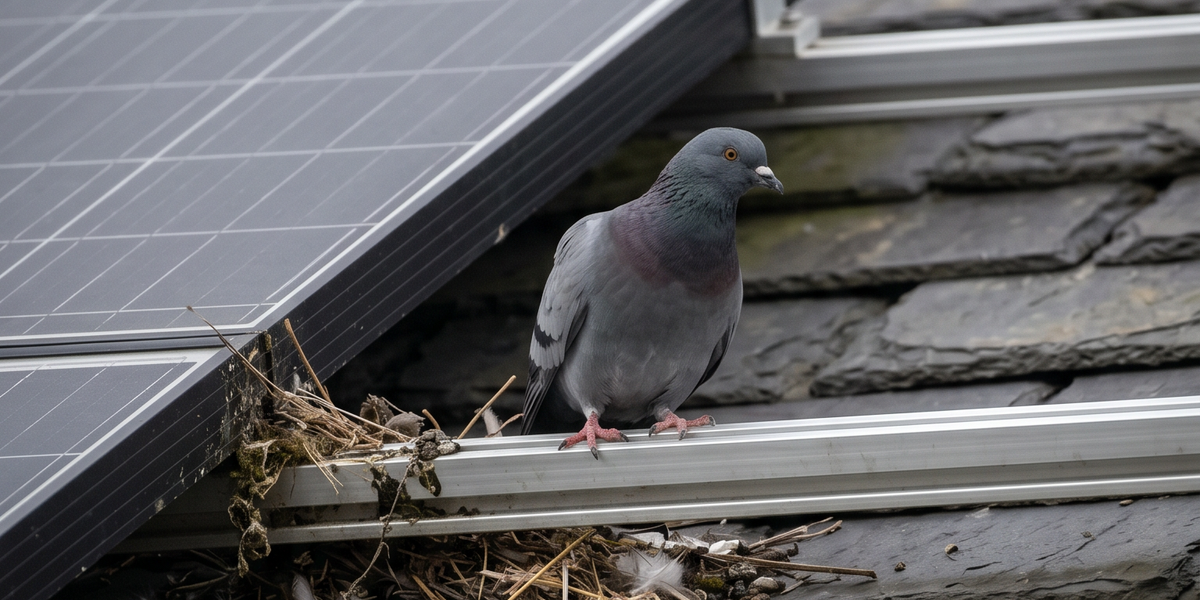
Birds Nesting Under Your Solar Panels? Here is What to Do
If you have noticed increased bird activity around your roof, or you can hear rustling and scratching from above your ceiling, there is a good chance you have birds nesting under solar panels. It is a problem that affects thousands of homeowners across Bournemouth, Dorset, and the wider South Coast every year, and it causes far more damage than most people expect. Left unchecked, nesting birds can reduce your system's output, void your warranty, and create repair bills that far outweigh the cost of prevention.
Why Do Birds Nest Under Solar Panels?
Solar panels sit raised off the roof surface, typically by a gap of several centimetres. That gap is warm, sheltered, and completely protected from wind and rain. For pigeons, starlings, and sparrows, it is essentially a purpose-built nesting site. The panels block out aerial predators, the residual heat from the cells keeps the space comfortable, and the south-facing orientation of most UK rooftop systems means the nest gets plenty of warmth throughout the day.
Bournemouth and the surrounding coastal areas have particularly high populations of feral pigeons. The town's seaside environment, dense housing, and abundance of flat and low-pitched roofs make it ideal territory for these birds year-round. If your neighbours have had bird problems, your roof is likely already on the scouting list.
Starlings are another common culprit along the Hampshire and Dorset coast, especially during spring and early summer when nesting season peaks. Once a single pair establishes a nest, others often follow, and within a season you can go from one small nest to a full colony beneath your array.
The Real Damage Birds Can Do to Your Solar System
Many homeowners assume birds are just a nuisance rather than a genuine threat. That underestimation is costly. Here is what is actually happening beneath your panels when birds move in.
Wire and Cable Damage
Birds peck, scratch, and pull at materials to build and reinforce their nests. The DC cables running between your solar panels and inverter are particularly vulnerable. These cables carry live electricity at relatively high voltages, and if the insulation is compromised, you are looking at serious safety risks including arc faults and, in extreme cases, roof fires. The Health and Safety Executive has issued guidance on the fire risks associated with damaged photovoltaic wiring, and cable degradation from pest activity is a recognised cause.
Blocking Ventilation and Causing Overheating
Solar panels are designed to shed heat through the gap between the panel and the roof. Nesting material, droppings, and debris can block this ventilation channel, causing panels to run hotter than they should. Every degree of excess temperature above the panel's optimal operating point reduces its efficiency. A heavily fouled system can lose ten percent or more of its annual output through thermal inefficiency alone, which is a significant hit to your electricity savings.
Droppings on the Panel Surface
Bird droppings are one of the leading causes of hotspots on solar panels. When a concentrated patch of droppings shades a small section of a cell, that cell stops generating power and instead dissipates energy as heat. Over time this can cause permanent cell damage. Pigeons roosting on top of or around your panels will coat the glass surface, and even a modest accumulation reduces output measurably. You can read more about how external factors silently cut your generation in our article on why solar panels stop generating enough power.
Structural Damage to Mounting Hardware
Bird droppings are highly acidic. Prolonged exposure to guano can corrode the aluminium mounting frames and fixings that hold your panels in place. On coastal properties in Dorset and Hampshire, where salt air is already accelerating corrosion, this combination can shorten the working life of your mounting system considerably. If you are not already aware of how the coastal environment affects your installation, our guide on how salt air damages solar panels on the South Coast covers this in detail.
How to Tell if Birds Are Already Under Your Panels
You do not always need to climb onto the roof to spot the warning signs. From ground level, look for nesting material sticking out from the edges of your array, streaks of droppings running down the panel face or onto the roof tiles, and an unusual concentration of birds landing on and around your roof. Noise is another clear indicator. Scratching, cooing, and the sound of movement in the roof space during daylight hours all point to active nesting.
If your monitoring app is showing a drop in output that you cannot account for with cloud cover or the season, bird activity could be the cause. The Met Office provides detailed regional sunshine data for the South Coast, which is useful for cross-referencing your expected versus actual generation figures. A significant and unexplained gap is always worth investigating.
For a quick assessment of how your system is performing right now, try the free 60-second solar health check on the No1 Solar Care website.
Birds Nesting Under Solar Panels: What You Can Do About It
Once birds have taken up residence, you have two parallel tasks: removing the existing nest safely and preventing future access. Both need careful handling.
Legal Considerations Before You Act
This is not a minor detail. Under the Wildlife and Countryside Act 1981, it is a criminal offence to disturb or destroy the nest of any wild bird while it is in use or being built. This applies to pigeons just as much as rarer species. If nesting season is underway, typically from late February through to August in the UK, you may need to wait until the nest is vacated before taking any action. Attempting to remove an active nest without proper authority is not just ethically questionable, it can result in prosecution. Always check the current legal position before acting, and if in doubt consult Citizens Advice or a licensed pest controller.
Professional Nest Removal and Cleaning
Once the nesting season has ended and the birds have moved on, a professional clean and inspection is essential before any deterrents are installed. Nesting material contains parasites, mites, fungi, and bacteria. Handling it without proper protective equipment is a genuine health risk. A qualified solar panel maintenance team will remove the debris safely, clean the panel undersides and surfaces, inspect all cabling and mounting hardware for damage, and give you a clear picture of what the birds have done.
Solar Panel Bird Proofing: The Mesh Solution
The most effective long-term solution is a purpose-made wire mesh or bird guard system fitted around the perimeter of the array. These systems attach to the panel frames using clips that do not require any drilling into the panels or roof, and they create a physical barrier that prevents birds from accessing the gap underneath. When properly installed by a competent professional, a good mesh system should last ten years or more.
This is not a DIY job. Working at height on a pitched roof carries serious risks, and incorrectly fitted clips can damage panel frames or allow water ingress. Always use a professional with experience in solar installations. The MCS certification scheme provides a register of approved solar professionals whose work meets recognised industry standards.
Spike Strips and Other Deterrents
Anti-roosting spike strips fitted along the top edge of your array can discourage birds from landing in the first place. They work reasonably well for larger birds like pigeons but are less effective against smaller species. They are best used as a complement to mesh proofing rather than a standalone solution, particularly in high-density areas like central Bournemouth where pigeon pressure is constant.
What the Damage Could Cost You
The cost of ignoring a bird nesting problem adds up quickly. A professional clean and inspection after a serious infestation can run to several hundred pounds once you factor in the extent of the work. Cable replacements, if the wiring has been damaged, add further to that bill. Output losses over a full year on a typical 4kW South Coast system can represent a meaningful financial hit, especially with energy prices remaining elevated. You can find a realistic breakdown of what solar maintenance and repairs tend to cost in our article on solar panel maintenance costs for UK homeowners.
There is also a warranty angle worth considering. Most solar panel manufacturers require the system to be maintained in reasonable condition. Evidence of prolonged pest infestation and neglect can give a manufacturer grounds to reject a warranty claim for cell or module failure. The Solar Energy UK trade body has highlighted that physical damage from external sources, including wildlife, is an area where homeowners often assume they are protected when they are not.
How No1 Solar Care Can Help
At No1 Solar Care, we work with homeowners across Bournemouth, Poole, Christchurch, and throughout Dorset and Hampshire who are dealing with the aftermath of bird nesting. Our Solar MOT service covers a thorough inspection of your panels, wiring, mounting hardware, and inverter, giving you a complete picture of the current condition of your system and identifying any bird-related damage before it gets worse.
The Solar MOT service is particularly valuable after a nesting season because the damage is not always visible from ground level. Pecked cable insulation, corroded fixings, and thermally stressed cells can all be present without obvious outward signs. Our team carries out every inspection safely from the roof, using professional access equipment, and we provide a clear written report of everything found.
If you want to understand the full scope of what a professional maintenance visit involves, our guide to what a Solar MOT actually covers is a good starting point. And if you are thinking about the broader maintenance picture, the complete guide to solar panel maintenance on the South Coast covers everything a homeowner in this region needs to know.
We can also advise on bird proofing solutions following your inspection, so you are not just dealing with today's problem but protecting your system for the years ahead.
Preventing the Problem in the First Place
If you have a relatively new installation or you have recently cleared a nesting problem, now is the time to act preventatively. Getting bird proofing fitted before the next nesting season, which starts as early as late February for some species, is significantly cheaper and easier than dealing with an established colony after the fact.
Spring is also the ideal time for a general system health check. Combining a post-winter inspection with bird proofing installation in a single visit makes practical and financial sense. Our article on spring solar panel health checks explains what to look for at this time of year and why the timing matters for your annual output.
The broader lesson is that solar panels are an asset that rewards regular attention. Systems that are inspected, cleaned, and proofed against pests consistently outperform neglected ones. The true cost of neglecting solar panels is higher than most owners realise, and bird damage is one of the most avoidable contributors to that cost. Given that Energy Saving Trust data consistently shows well-maintained solar systems delivering stronger long-term returns, protecting your investment from preventable damage is simply good housekeeping.
Frequently Asked Questions
Are birds nesting under solar panels dangerous?
Yes, they can be. Beyond the noise and mess, birds can damage the wiring running beneath your panels, block ventilation and cause overheating, and introduce fire risks through cable degradation. Droppings also cause hotspots on panel surfaces and corrode mounting hardware over time, leading to costly repairs.
Can I remove a bird nest from under my solar panels myself?
Not safely, and potentially not legally. Under the Wildlife and Countryside Act 1981, disturbing an active nest is a criminal offence. Even once the birds have gone, handling nesting material without protection is a health hazard. It is always safer to use a professional with the right equipment and training.
How much does bird proofing for solar panels cost?
Costs vary depending on the size of your array and roof access requirements. As a general guide, most South Coast homeowners pay between £150 and £400 for a professionally installed mesh system. This is modest compared to the cost of repairing cable damage or replacing panels affected by prolonged bird activity.
Will birds nesting under solar panels affect my electricity generation?
Yes. Nesting material blocking ventilation causes panels to overheat and lose efficiency. Droppings on panel surfaces create shading and hotspots. Some homeowners see output drops of 10% or more due to a serious infestation. A professional inspection can quantify the impact on your system.
Does home insurance cover damage caused by birds nesting under solar panels?
It depends on your policy. Some home insurance policies cover accidental damage to solar panels, but gradual damage from pest activity is often excluded. Always check your policy wording carefully. Our guide on solar panel home insurance explains what to look for and what questions to ask your insurer.
When is the best time to get bird proofing fitted?
The ideal window is late autumn or winter, after nesting season has ended and before it resumes in late February. This gives you a clear run to install mesh and deterrents without legal complications. If you have missed that window, a professional can advise on the safest approach given the time of year.
How do I know if birds have already damaged my solar panels?
A noticeable drop in output, visible nesting material at the panel edges, droppings on the roof or panel surface, and unusual noises from the roof space are all warning signs. The best way to get a definitive answer is through a Solar MOT service, which includes a physical inspection of cables, frames, and panel condition from the roof.
Book your Solar MOT today. Call 01202 023069 or visit no1solarcare.co.uk/solar-mot