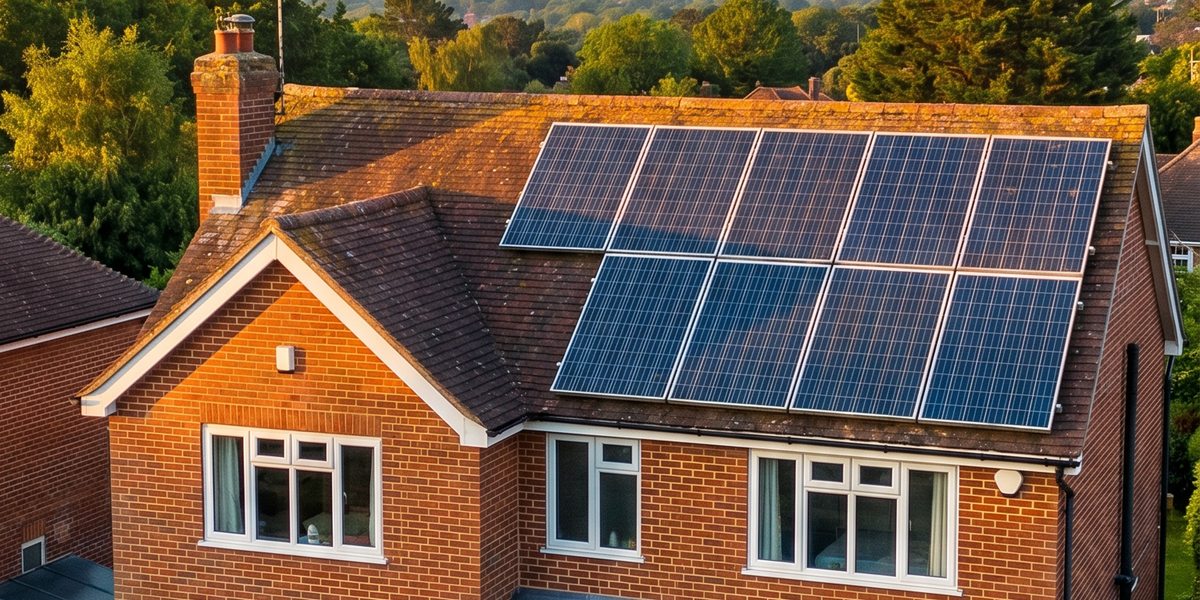
Feed-in Tariff Systems in 2026: Keeping Your Legacy Solar Investment Running
If you were one of the smart homeowners who installed solar panels before the Feed-in Tariff scheme closed to new applicants in 2019, you're sitting on something genuinely valuable. Feed in tariff legacy systems maintenance is a topic that doesn't get nearly enough attention, yet it directly affects how much money ends up in your pocket each quarter. The panels on your roof have been quietly working for anywhere between seven and fifteen years, and while solar technology is built to last, that doesn't mean it can be ignored indefinitely.
Across Bournemouth, Dorset, and the wider South Coast, we work with homeowners who are still receiving FiT payments but have never had their system professionally inspected since installation. That's a risky position to be in. A system that's underperforming by even 15 to 20 percent could be costing you hundreds of pounds a year in lost generation and export payments, all while you assume everything is fine because the inverter light is still green.
Understanding What the Feed-in Tariff Actually Pays You
The FiT scheme paid participants a generation tariff for every unit of electricity their system produced, plus a separate export tariff for the electricity they sent back to the grid. When the scheme was running at its peak, early adopters locked in generation rates as high as 43p per kilowatt hour. Even those who joined later in the scheme secured rates well above the current energy market price.
What many people don't fully appreciate is that these payments are based on what your system is recorded as generating, not necessarily what it's capable of generating. Ofgem and your energy supplier rely on meter readings and, in some cases, deemed export calculations. If your panels are dirty, your inverter is degrading, or shading from tree growth is affecting your output, you're losing money quietly and consistently.
The average 4kWp domestic system installed around 2011 to 2013 should still be generating somewhere in the region of 3,400 to 3,800 kWh per year on the South Coast, given our reasonable sunshine hours. If your annual generation figure has been creeping downward without explanation, that's a clear sign your system needs professional attention.
Generation Versus What You're Actually Receiving
One of the most common issues we see with older FiT systems is a gap between what the system should be generating and what's actually being recorded. This can happen for several reasons. Inverter efficiency drops over time, particularly in units that are now ten or more years old. Panel soiling builds up gradually, so the change is almost imperceptible month to month. Micro-cracks in cells develop after years of thermal cycling through hot summers and cold winters.
The only way to know for certain where your system stands is to have it properly tested and inspected. A visual check from the ground tells you very little. You need someone on the roof with the right equipment, checking panel condition, connection integrity, and string performance. Our free 60-second solar health check is a useful first step for working out whether your system warrants a full inspection.
The Real Risks of Neglecting an Ageing Solar Installation
Solar panels are often marketed as maintenance-free, and while it's true they don't need the same level of attention as a gas boiler, that claim has led a lot of homeowners into a false sense of security. An ageing system carries specific risks that simply weren't a concern when it was newly installed.
DC wiring degrades over time. The UV-resistant sheathing on cables installed in 2010 or 2011 is now approaching or past its expected service life. Cracked or brittle cable insulation creates both a fire risk and an efficiency loss. Junction boxes on older panels can suffer water ingress, particularly after storm seasons of the sort we regularly see along the Hampshire and Dorset coast.
Inverters are arguably the most failure-prone component in any solar installation. Most quality string inverters have a rated lifespan of ten to fifteen years. If your system was installed in 2011 and is still running on its original inverter, you're living on borrowed time. An inverter failure doesn't just cost you the replacement expense. It also means zero generation and zero FiT payments for however long it takes to diagnose and fix the problem.
Fire Safety and Electrical Compliance
This is a point that deserves serious attention. Older installations were carried out under different electrical regulations, and while they were compliant at the time, standards have moved on. DC isolators, for example, have been a known failure point in installations from the early 2010s. Some brands used during that era have a track record of internal arcing, which in worst-case scenarios has contributed to roof fires.
A professional inspection will check that your isolators, combiner boxes, and wiring are in safe working order. If they're not, the cost of remediation is a fraction of what you'd face dealing with storm or fire damage, and your home insurance may not cover a fire traced back to a poorly maintained electrical installation.
Feed in Tariff Legacy Systems Maintenance: What a Proper Service Covers
A proper maintenance visit for a FiT-era solar system is quite different from a quick clean and a glance at the inverter display. At No1 Solar Care, our Solar MOT is specifically designed to give older systems a thorough health check that addresses every aspect of performance and safety.
During a Solar MOT, our engineers carry out a full visual inspection of the panels themselves, checking for surface soiling, physical damage, delamination, and hotspot discolouration. They inspect all roof-level wiring and cable management, check the condition of mounting hardware and brackets, and test DC and AC isolators for correct operation. The inverter is inspected and any error codes or performance anomalies are investigated. We also check your generation meter and, where accessible, your export meter to ensure readings are being captured correctly.
If we identify any issues during the inspection, you receive a clear written report with our recommendations. There's no pressure to commit to additional work on the day, but you'll have an honest picture of where your system stands.
How Often Should a FiT System Be Serviced?
As a minimum, a system that's more than five years old should be professionally inspected every two years. For systems over ten years old, an annual check is sensible. That might sound like an unnecessary cost when your system appears to be working, but consider the maths. If a Solar MOT identifies an issue causing even a 10 percent output loss on a system generating £400 a year in FiT payments, you've more than covered the cost of the inspection in the first year alone.
Panel cleaning should be carried out once or twice a year depending on your location and the degree of local soiling. Properties near the coast, as many of our customers in Bournemouth and along the Hampshire and Dorset shoreline are, can experience higher rates of salt deposition on panels. This creates a surface film that standard rain doesn't remove effectively and which can measurably reduce output.
Inverter Replacement and the FiT Implications
Replacing an inverter on a FiT-registered system is something that needs to be handled carefully. Your FiT agreement is tied to the specific installation, and any modifications, including inverter replacement, should in principle be notified to your FiT licensee. In practice, a like-for-like replacement of the same capacity inverter is unlikely to affect your tariff, but it's worth understanding the process.
When we replace inverters for customers across the South Coast, we always advise them on the notification requirements and provide documentation of the replacement for their records. Getting this wrong, or using an unqualified installer, could theoretically give your energy supplier grounds to query your payments.
The good news is that modern replacement inverters are significantly more efficient than the units installed a decade ago. A new inverter can often boost system output by a few percentage points simply by operating at a higher conversion efficiency. Over the remaining life of your FiT contract, that improvement compounds into a meaningful amount.
Battery Storage and Your FiT Payments
A lot of FiT customers have been asking about adding battery storage to their existing systems. It's a reasonable question given energy prices, but it needs careful consideration. Adding a battery to a FiT-registered system can affect your deemed export payments if not configured correctly. The deemed export calculation assumes you export 50 percent of your generation, so if a battery is capturing that electricity for later use, you're technically consuming more of what you generate rather than exporting it.
For systems with actual export meters rather than deemed calculations, the picture is clearer. Either way, any battery retrofit should be designed and installed with your FiT arrangement in mind. We'd always recommend getting proper advice before committing to a battery installation on an older FiT system.
Getting the Most From Your Remaining FiT Contract Years
The FiT scheme runs for 20 years from the date of registration for most installations. That means homeowners who joined in 2011 and 2012 are looking at contract end dates of 2031 and 2032. There are still good years ahead, and the difference between a well-maintained system and a neglected one over that period is substantial.
Think of it this way. A system generating 10 percent below its potential due to soiling, mild inverter degradation, and a couple of underperforming panels isn't a crisis. But compounded over five or six remaining FiT years, that loss adds up. On a mid-sized installation with decent tariff rates, the cumulative financial difference between a maintained and unmaintained system could easily run into four figures.
For homeowners in Bournemouth and across Dorset and Hampshire, where property values are high and energy costs have risen sharply, protecting a solar investment that's already paid off much of its original capital cost is straightforward common sense.
Our Solar MOT is the starting point for that protection. It gives you a clear, honest assessment of where your system stands and what, if anything, needs attention. Many customers find their system is in better shape than they feared. Others discover issues they're genuinely glad to have caught before they became serious problems.
Frequently Asked Questions About FiT Legacy System Maintenance
What is feed in tariff legacy systems maintenance and why does it matter now?
Feed in tariff legacy systems maintenance refers to the ongoing servicing and inspection of solar panel installations that are registered under the now-closed FiT scheme. It matters because these systems are now between seven and fifteen years old, and components like inverters, cabling, and DC isolators all have finite lifespans. Neglecting maintenance risks both lost generation income and safety issues.
Will having my system inspected affect my FiT payments?
A routine inspection and cleaning will not affect your FiT payments in any way. In fact, it's likely to improve your generation figures, which benefits you financially. Only significant modifications to the registered system, such as changing the panel count or inverter capacity, would potentially need to be notified to your FiT licensee. A standard maintenance visit carries no such risk.
How do I know if my solar system is underperforming?
The clearest way is to compare your current annual generation figures against your original MCS certificate, which states the predicted annual output for your system. A drop of more than 10 to 15 percent compared to predictions, adjusted for weather variation, suggests a performance issue worth investigating. Your inverter display or monitoring app may also show irregular patterns that indicate a problem with one or more panels. Our free 60-second solar health check can help you decide whether to book a full inspection.
My inverter is over ten years old. Should I replace it proactively?
Most quality inverters have a rated lifespan of ten to fifteen years, though some will last longer with good luck and stable operating conditions. If your inverter is past ten years old and showing any error codes, unusual noises, or efficiency drops, proactive replacement is worth serious consideration. An unexpected failure means zero generation and zero FiT income until it's fixed, which could take days or weeks depending on parts availability.
Can No1 Solar Care service my FiT system if it was installed by a different company?
Absolutely. We service solar installations across the South Coast regardless of who originally installed them. Our Solar MOT is designed to assess any grid-connected domestic solar system and covers all the main components regardless of brand or installer. We carry documentation of all work carried out, which forms a useful service history record for your FiT files and any future property sale.
Is it worth cleaning solar panels on a FiT system or will rain do the job?
Rainwater does remove loose dust to some extent, but it doesn't effectively remove bird droppings, salt deposits, lichen, or the compacted grime that builds up in the lower corners of panels over time. Studies have consistently shown that soiled panels can operate at 5 to 20 percent below their clean output depending on conditions. For FiT customers on the Hampshire and Dorset coast, where salt and organic matter are common, professional cleaning typically pays for itself within a few months of improved generation.
What happens to my FiT payments if I sell my house?
FiT payments are tied to the property and transfer to the new owner on sale. As the selling party, it's in your interest to have the system in good working order and documented properly, as buyers and their surveyors are increasingly asking for service records and inspection reports. A recent Solar MOT certificate is a straightforward way to demonstrate that the system has been properly maintained and adds genuine value to your sale.
Book your Solar MOT today. Call 01202 023069 or visit no1solarcare.co.uk/solar-mot