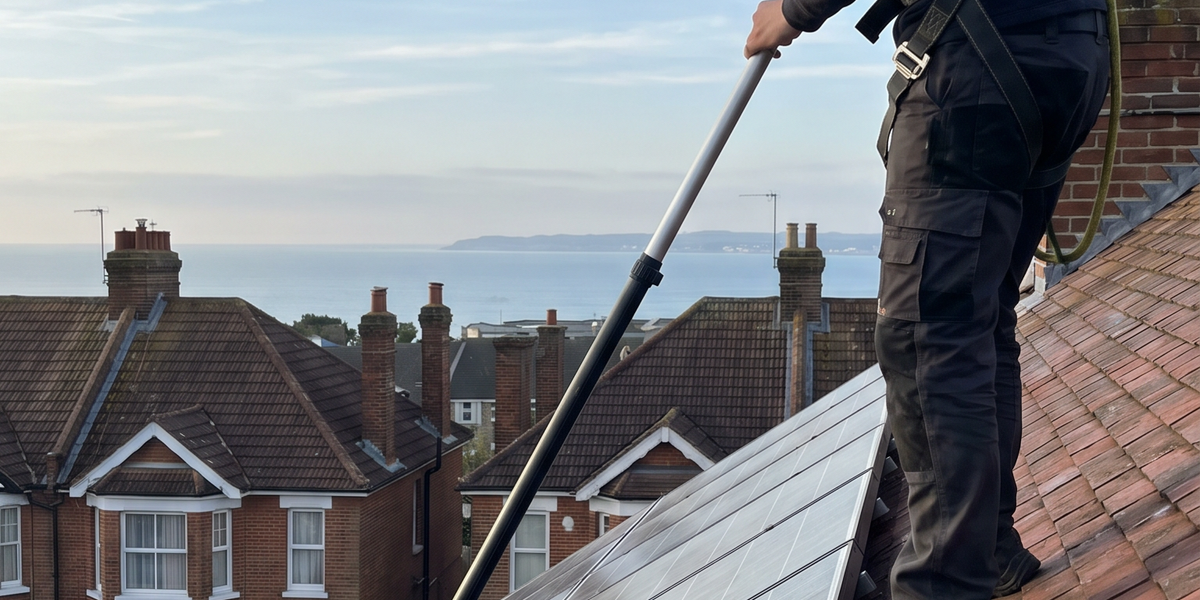
The Complete Guide to Solar Panel Maintenance on the South Coast
Industry data suggests that dirty or poorly maintained panels can lose anywhere between 15% and 30% of their energy output. On a typical 4kW domestic system, that kind of drop translates into real money leaving your pocket every year through lost generation and reduced export income. Add in the salt air, coastal weather and variable sunshine that characterises life along the Dorset and Hampshire coastline, and the case for regular professional maintenance becomes even clearer.
What the South Coast Climate Does to Your Panels
The South Coast has a reputation as one of the sunniest parts of the UK, and that's genuinely true. Bournemouth regularly clocks up more sunshine hours than almost anywhere else in England. That's great for solar generation, but it also means panels are working hard and being exposed to constant UV radiation, temperature swings and airborne debris.
Salt Air and Coastal Grime
If your home is within a few miles of the coast, which covers a huge proportion of properties in Bournemouth, Poole and along the Dorset shoreline, your panels are regularly being coated in a fine layer of salt residue. Salt doesn't wash off cleanly in the rain the way ordinary dust does. Instead it builds up in a thin film that scatters incoming light before it ever reaches the photovoltaic cells beneath. Over months and years, this creates a persistent drag on your system's output that simply won't resolve itself without proper cleaning.
Wind, Leaves and Organic Debris
The South Coast also sees its share of autumn storms rolling in off the Channel. These bring leaves, moss spores, bird droppings and general organic material onto roof surfaces, all of which can settle on panels and hold moisture. Bird droppings in particular cause a disproportionate amount of shading damage relative to their size. A single dropping sitting across one cell in a panel can reduce that panel's output by a significant margin due to the way solar cells are wired together.
Temperature and Seasonal Changes
Solar panels actually perform better in cooler, clear conditions than in intense summer heat, which surprises many homeowners. But repeated cycles of heating and cooling do place stress on mounting hardware, cable connections and the panel frames themselves. Expansion and contraction over time can loosen fixings, compromise weatherproofing seals and allow moisture ingress into junction boxes. None of this happens overnight, but without periodic inspection it can go undetected for years.
Solar Panel Maintenance in Bournemouth: What a Professional Service Covers
There's a meaningful difference between wiping down your panels with a hosepipe and having a qualified technician carry out a proper maintenance inspection. No1 Solar Care's Solar MOT is designed to cover every aspect of system health in a single visit, giving you a clear picture of exactly how your installation is performing and what, if anything, needs attention.
Professional Cleaning
Professional solar panel cleaning uses purified, deionised water and specialist soft-bristle equipment that won't scratch the glass surface or leave residue behind. Tap water contains minerals that dry into white streaks and actually worsen panel efficiency over time, which is why a hosepipe or pressure washer is never the right tool. A proper clean removes salt film, organic matter and atmospheric pollution without damaging the anti-reflective coating that manufacturers apply to panel surfaces.
Electrical and Inverter Checks
The inverter is the heart of your solar system, converting DC electricity from the panels into AC power your home can use. Inverters have a typical lifespan of 10 to 15 years and can fail gradually rather than all at once, meaning you might be losing generation without any obvious warning signs. A thorough inspection includes checking inverter performance data, reviewing error logs where available and testing output against what the system should theoretically be producing given the current conditions.
Structural and Mounting Inspection
Every fixing point, rail section, cable clip and weatherproofing seal gets checked during a Solar MOT visit. On South Coast properties, where wind loading can be significant and salt air accelerates corrosion on metal components, this kind of structural check is genuinely important rather than just a box-ticking exercise. Loose panels are a safety issue, not just an efficiency one.
Performance Reporting
At the end of the visit, you receive a written report detailing the condition of your system, any issues identified and recommendations for any follow-up work. This gives you documented evidence of your system's health, which can be useful for warranty purposes and when the time comes to sell your property.
How Often Should You Have Your Panels Serviced?
For most homes on the South Coast, an annual professional service is the right baseline. Given the coastal environment around Bournemouth and the high levels of organic debris that accumulate through the autumn and winter months, some homeowners with systems in exposed locations benefit from twice-yearly cleaning alongside the annual full inspection.
As a rough rule: if you can see visible soiling on the panels from ground level, it's already having a noticeable impact on output. Panels that look clean from the street are often still carrying enough invisible residue to be worth professional attention.
Systems that are more than five years old warrant closer scrutiny. Components that were installed at the same time will tend to age together, and a detailed inspection becomes more valuable as the system matures. Our Solar MOT is particularly good value when you consider that identifying a failing diode or a loose connection early can prevent a much more expensive repair down the line.
Can You Maintain Solar Panels Yourself?
Homeowners often ask whether they can handle solar panel maintenance themselves, and it's worth being honest about this. There are things you can sensibly do and things you really shouldn't.
Keeping an eye on your generation figures through your inverter display or monitoring app is something every panel owner should do regularly. A sudden or gradual drop in output is a signal worth investigating. Our free 60-second solar health check is a quick way to find out whether a closer look is worthwhile. Clearing obvious debris like leaves from around panels during dry spells, where it can be done safely from a fixed ladder on a single-storey extension, is also reasonable in some cases.
What you should not do is attempt to clean panels on a pitched roof without the right equipment and training, use a pressure washer anywhere near panels or cables, or attempt to open any electrical components. The voltages involved in a solar system are potentially lethal, and working at height without proper fall protection causes serious injuries every year in the UK. The professional service cost is modest compared to the risks.
Signs Your Solar System Needs Attention Right Now
Some warning signs should prompt you to book an inspection sooner rather than waiting for your next scheduled service. If your inverter is showing a fault light or error code, don't ignore it and hope it clears. If your monthly generation figures are noticeably lower than the same period in a previous year, accounting for differences in weather, that's a real signal. Visible physical damage to panels, including chips, cracks or discolouration, needs professional assessment. Any sign of water ingress around the inverter or junction boxes should be treated as urgent.
Homeowners across Dorset and Hampshire who have older systems installed under the Feed-in Tariff scheme should be especially attentive. Those systems are now eight to fifteen years old in many cases, and while quality panels are built to last 25 years or more, the surrounding components and connections need checking as they age.
The Financial Case for Regular Maintenance
Let's be practical about the numbers. A well-maintained 4kW system in a location like Bournemouth might generate around 3,500 to 4,000 kWh per year. If poor maintenance drops that output by 20%, you're losing 700 to 800 kWh annually. At current electricity prices, that represents somewhere between £200 and £280 of lost value each year, either from self-consumption you miss out on or export income you don't receive.
An annual Solar MOT pays for itself within the first year if it recovers even a modest proportion of that lost generation, and it protects a system that cost several thousand pounds to install. Looked at over a 10-year period, regular maintenance is not an optional extra but a sensible part of owning solar panels.
Frequently Asked Questions About Solar Panel Maintenance
How often should I get solar panel maintenance in Bournemouth?
For most properties in Bournemouth and along the South Coast, once a year is the minimum recommended frequency. The coastal environment means salt and organic debris accumulate faster than in inland areas. Homes in particularly exposed spots or with trees nearby may benefit from an additional clean midway through the year to keep output at its best.
What is included in No1 Solar Care's Solar MOT?
The Solar MOT covers a full professional clean using purified water and specialist equipment, a thorough inspection of all mounting hardware and structural fixings, an electrical check of the inverter and connections, a review of system performance data and a written condition report. It's a comprehensive single-visit service covering every aspect of your system's health.
Will rain keep my solar panels clean enough without professional help?
Rain helps with some loose dust but it doesn't remove salt residue, bird droppings or the sticky organic film that builds up over time. In coastal areas like Bournemouth and Poole, salt film in particular bonds to panel glass and needs proper deionised water cleaning to shift effectively. Relying solely on rainfall will result in a gradual, ongoing reduction in output.
Can dirty panels cause permanent damage?
In most cases, soiling reduces output without causing permanent damage, and a thorough clean restores performance. However, bird droppings left in place for extended periods can etch into the glass coating over time. Hotspots caused by persistent shading from debris can also stress individual cells. Catching these issues through regular maintenance prevents them from becoming lasting problems.
Is it safe to clean solar panels myself?
Cleaning panels on a ground-mounted system or a flat-roof installation at low height can be manageable for some homeowners if done carefully with the right equipment, specifically purified water and a soft brush. However, working on a pitched roof without professional fall protection is genuinely dangerous and not recommended. Never use a pressure washer on panels or attempt to open any electrical components.
How do I know if my solar panels are underperforming?
The most reliable method is to track your monthly generation figures and compare them year on year, allowing for differences in sunshine hours between seasons. Many modern inverters also offer online monitoring that shows daily output. If your figures drop noticeably without a clear weather-related explanation, it's worth booking an inspection. Our free 60-second solar health check can also help you decide if a visit is warranted. No1 Solar Care covers homeowners across Dorset, Hampshire and the wider South Coast.
Does panel maintenance affect my warranty?
Using unqualified personnel or inappropriate cleaning methods can potentially void manufacturer warranties. Professional maintenance carried out by a qualified MCS-registered company like No1 Solar Care uses appropriate techniques and provides documented service records. This protects your warranty position and gives you evidence of proper care if you ever need to make a claim against your panels or inverter.
Book your Solar MOT today. Call 01202 023069 or visit no1solarcare.co.uk/solar-mot