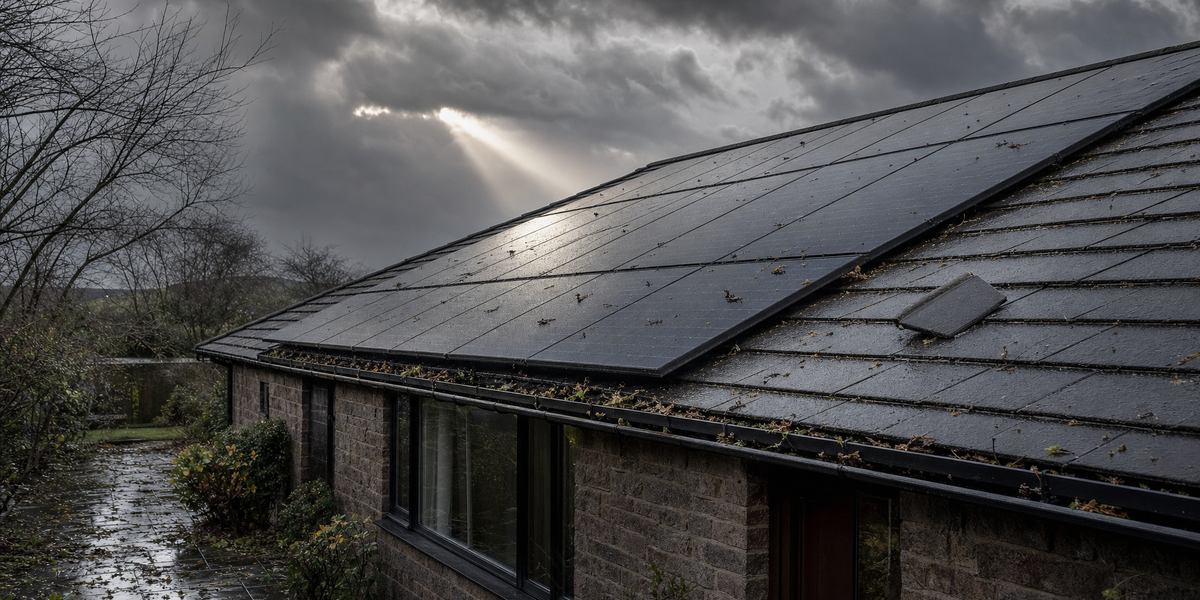
Storm Damage to Solar Panels: What to Do and Who Pays
The UK storm season runs from 1 September to the end of the following August, and each year the Met Office, Met Éireann and KNMI publish the list of storm names a few days before it opens. For the growing number of homeowners with rooftop solar, a named storm raises a question nobody wants to be answering in the dark: has that done any damage, and if it has, who pays?
We cover two coastlines with very different weather. On the South Coast, properties in Bournemouth, Poole, Christchurch and across Dorset and Hampshire take Channel systems with very little to slow them down. In South Wales, Cardiff, Newport, Swansea and the Bristol Channel coast get their own share of Atlantic weather. We have helped a great many homeowners assess and repair storm-damaged systems across both, and the pattern is consistent: proper response and documentation make the difference between a paid claim and a rejected one.
In summary: Properly installed solar panels rarely blow off a roof. UK mounting systems are engineered against site-specific wind loading, and since August 2025 flat-roof arrays must use an MCS 012 certified mounting kit. The real storm risks are loosened clamps, lifted flashings, debris impact and nesting material working free, all of which are invisible from the ground.
How do storms actually damage solar panels?
Worth knowing first: whole panels departing a roof is rare, and where it happens the mounting system failed rather than the panel. The standard governing this is MIS 3002, the MCS Solar PV Installation Standard, which requires the installer to hold evidence of completed structural and wind loading calculations for your specific roof, pitch and location. A change landed on 10 August 2025: flat roofs, meaning anything pitched at 10 degrees or less, must now use an MCS 012 certified mounting system. That is reassuring for anything installed since. It says nothing about the array that went up in 2012, when the Feed-in Tariff boom was running and installer quality varied enormously. Those systems are now fourteen years into thermal cycling, salt exposure and wind loading, and clamp bolts do not stay at their installation torque forever.
Solar panels are engineered to withstand significant environmental stress. Most quality panels are tested to resist impacts equivalent to golf ball-sized hailstones travelling at around 50 miles per hour. They're also designed to cope with wind speeds exceeding 80mph. However, British storms can exceed these thresholds, and even the best installations have vulnerable points.
Wind Damage
High winds represent the most common cause of storm damage to solar panels across the UK. While the panels themselves might survive, the mounting systems can fail under extreme conditions. Wind doesn't just push against panels directly. It creates uplift forces that can work fixings loose over time. A single storm might not cause immediate failure, but it can weaken mounting points, leaving the system vulnerable to future weather events.
We've attended properties across Dorset where panels have been lifted entirely from roofs, taking tiles and mounting rails with them. In other cases, the panels remain attached but have shifted position, breaking electrical connections and creating safety hazards.
Hail and Impact Damage
Hail damage is less common in southern England than in other parts of the country, but it does occur. When hailstones exceed the size and velocity that panels are rated for, the tempered glass can crack or shatter. Even small cracks might not seem serious initially, but they allow moisture ingress that degrades the photovoltaic cells beneath.
Flying debris causes similar problems. Loose roof tiles, branches, garden furniture, and other airborne objects can strike panels with enough force to cause immediate, visible damage.
Water Damage
Heavy rain alone won't damage properly installed solar panels. However, when combined with wind damage or existing cracks, water can penetrate the panel lamination. This leads to corrosion of electrical components, reduced performance, and potential safety issues including electrical faults.
What should I do immediately after storm damage?
When you discover or suspect storm damage to your solar installation, your first priority must be safety. Never attempt to inspect roof-mounted panels yourself during or immediately after a storm. Wait for conditions to calm completely before taking any action.
Step One: Check Your Inverter Display
Your inverter provides the first indication of system problems. If it's showing error codes, reduced output, or complete failure, there's likely damage somewhere in the system. Make a note of any error codes or unusual readings for your records.
Some modern systems include monitoring apps that let you track performance remotely. Check for any sudden drops in output that coincide with the storm timing. This information proves useful for both repairs and insurance claims.
Step Two: Visual Inspection from Ground Level
From a safe position at ground level, look up at your panels. You might be able to spot obvious problems like missing panels, visible cracks, shifted positions, or dangling cables. If you have binoculars, they can help you get a clearer view without climbing.
Never go onto your roof to inspect damage. Solar panels can retain dangerous voltages even when damaged, and storm-weakened roof structures present additional risks.
Step Three: Document Everything
Before any repairs take place, thorough documentation protects your insurance claim. Take photographs and videos from multiple angles, capturing both the overall scene and close-up details of visible damage. Record the date and time, and note the weather conditions during the storm.
If other properties in your area suffered damage, this context can support your claim by demonstrating the severity of the storm event.
Step Four: Contact Your Insurance Company
Notify your insurer as soon as possible. Most policies require prompt reporting of damage, and delays can complicate claims. Have your policy number ready, along with your documentation and any relevant details about your solar installation.
Step Five: Arrange a Professional Inspection
Only qualified solar technicians should assess and repair storm damage. The assessment will identify all damage, including problems that aren't visible from the ground. This professional report becomes crucial evidence for your insurance claim and ensures no hidden damage is overlooked.
Will my insurance cover storm damage to solar panels?
The question of who pays for storm damage repairs depends on your specific insurance arrangements. Understanding your coverage before a storm strikes puts you in a much stronger position when you need to make a claim.
Home Buildings Insurance
Most standard home buildings insurance policies cover solar panels as part of the property structure. Storm damage typically falls under covered perils, meaning your insurer should pay for repairs or replacement minus any excess.
However, there are important caveats. You must have informed your insurer about your solar installation. Many homeowners assume coverage is automatic, only to discover during a claim that their policy excludes undisclosed modifications. If you haven't already, contact your insurer to confirm your panels are covered and that your sum insured reflects their value.
Policy Exclusions to Watch For
Insurers may refuse claims in certain circumstances. If damage results from poor installation or maintenance failures rather than storm force winds, your claim might be rejected. Some policies exclude damage caused by gradual wear or neglect, which is why regular professional maintenance matters so much.
Policies sometimes contain specific wind speed thresholds. If the storm didn't reach the defined wind speeds, coverage might not apply. Check your policy wording carefully.
Installer Warranties and Guarantees
Your solar panel warranty covers manufacturing defects rather than storm damage. However, if panels failed prematurely due to quality issues exposed by the storm, warranty claims might apply. Similarly, installation workmanship guarantees could be relevant if inadequate mounting contributed to the damage.
Review your warranty documents and contact your installer if you believe workmanship or product quality contributed to the failure.
Feed-in Tariff and Export Considerations
If your system is registered for the Feed-in Tariff or Smart Export Guarantee, extended downtime means lost income. Some insurance policies include loss of income provisions that compensate for this shortfall during repairs. Check whether your policy offers this protection.
How do I get repairs done properly?
Rushing into repairs with the first available contractor can cause problems. Taking time to arrange proper repairs protects your system's performance, your warranty coverage, and your safety.
Choosing a Qualified Repair Contractor
Solar panel repairs should only be undertaken by MCS-certified installers or equivalent qualified professionals. At No1 Solar Care, our technicians hold all relevant certifications and have specific experience with storm damage assessment and repair across Bournemouth and the wider South Coast region.
Be wary of storm chasers who appear in the area after severe weather, offering quick repairs at attractive prices. Poor quality repair work can void warranties, create safety hazards, and cause further damage down the line.
What Professional Assessment Involves
A thorough post-storm assessment examines every component of your system. Our Solar MOT, priced at £195, covers comprehensive testing that identifies both obvious damage and hidden problems. We check panel integrity, mounting security, cable conditions, junction box seals, and inverter operation.
Electrical testing reveals issues that visual inspection misses. Damaged cells might not be visible but will show up as reduced output or irregular current readings. We provide detailed reports suitable for insurance claims, complete with photographs and repair recommendations.
Temporary Safety Measures
If your system poses immediate risks, temporary isolation might be necessary. A qualified electrician can disconnect the system safely while you arrange permanent repairs. Never attempt to isolate a damaged solar system yourself.
For physical damage that could worsen, temporary protective covering can prevent water ingress while you wait for repairs. Again, this work should be carried out by professionals who can access your roof safely.
How do I prevent storm damage next time?
While you can't control the weather, proactive maintenance significantly reduces your risk of storm damage and strengthens your position if damage does occur.
Regular Professional Inspections
Annual maintenance checks catch potential problems before storms exploit them. Loose fixings, degraded seals and corroding components all make your system more vulnerable to extreme weather. Our Solar MOT at £195 examines all these factors, identifying issues while they are still minor and inexpensive to fix.
Homeowners across Hampshire and Dorset who maintain regular inspection schedules consistently experience fewer storm-related problems than those who skip maintenance.
Understanding Your System's Weak Points
Every installation has areas of higher vulnerability. End clamps, exposed cable runs, and panels at roof edges typically face greater wind stress. Knowing where your system's weak points lie helps you recognise early warning signs and prioritise inspection areas.
Seasonal Preparation
Before autumn storm season, a quick professional check can identify and address any developing issues. Trees that have grown since installation might now pose debris risks. Fixings that were tight last year might have loosened. A pre-season inspection catches these changes.
What does storm damage actually cost?
Repair costs vary enormously depending on damage extent. Minor repairs might cost a few hundred pounds, while severe damage requiring panel replacement and roof repairs can run into thousands.
Typical Repair Costs
Replacing a single damaged panel typically costs between £200 and £500, including labour. If mounting systems need replacement, add another £100 to £300 per panel position. Inverter repairs or replacement range from £400 for minor fixes to over £1,500 for complete replacement.
When storm damage affects both solar panels and the underlying roof structure, total repair bills can exceed the original installation cost. This reality underlines the importance of proper insurance coverage.
Hidden Costs to Consider
Beyond direct repair costs, storm damage creates knock-on expenses. Lost energy generation increases your electricity bills. If you're on an export tariff, you lose that income too. Scaffolding hire for roof access adds to repair bills. Taking time off work to meet assessors and contractors costs money.
Comprehensive insurance coverage that includes these indirect costs provides much better protection than basic policies.
When is damage not worth claiming?
Not every repair should go through insurance. For minor damage where repair costs fall close to your policy excess, paying directly might make more sense. Insurance claims can affect your future premiums, and multiple small claims might make you a higher risk in insurers' eyes.
Speak with your insurer to understand how a claim would affect your policy before deciding. For larger claims, insurance exists precisely for these situations, so don't hesitate to use it.
Frequently Asked Questions
Will my home insurance cover storm damage to solar panels in the UK?
Most home buildings insurance policies cover storm damage to solar panels, provided you've declared the installation to your insurer. Coverage typically applies when damage results from storm force winds, hail, or lightning. Check your policy documents to confirm solar panels are included and that your sum insured reflects their replacement value. Contact your insurer if you're uncertain about your coverage level.
How can I tell if my solar panels have storm damage?
Visible signs include cracked glass, displaced panels, loose or dangling cables, and debris strikes. Your inverter might display error codes or show reduced output. Many monitoring apps reveal sudden performance drops that indicate problems. For hidden damage affecting cells beneath intact glass, professional testing is essential. Never climb onto your roof to inspect panels yourself as this creates serious safety risks.
What should I do immediately after discovering storm damage?
Prioritise safety by staying off your roof and away from dangling cables. Document visible damage with photographs and videos from ground level. Note any inverter error codes or performance readings. Contact your insurance company promptly, as most policies require timely reporting. Then arrange a professional inspection from a qualified solar technician who can safely assess all damage and provide a detailed report for your claim.
How long do solar panel storm damage repairs typically take?
Repair timelines depend on damage severity and parts availability. Minor repairs like cable replacement or remounting can often be completed within a day or two of assessment. Panel replacements might take longer if specific models need ordering. Extensive damage requiring roof repairs alongside solar work can take several weeks. Your repair contractor should provide estimated timelines after their initial assessment.
Can I make a warranty claim for storm-damaged solar panels?
Standard manufacturer warranties cover defects in materials and workmanship rather than weather damage. However, if a manufacturing defect contributed to storm vulnerability, a warranty claim might apply. Installation workmanship guarantees could also be relevant if poor mounting allowed preventable damage. Review your warranty documentation and discuss potential claims with both your installer and your insurance company to determine the best approach.
How much does professional storm damage assessment cost?
Professional assessment costs vary by provider and by scope. At No1 Solar Care our comprehensive Solar MOT costs £195 and includes full electrical testing alongside physical inspection. The assessment identifies damage, provides repair recommendations, and generates documentation suitable for an insurance claim. That documentation matters: insurers exclude gradual wear and corrosion across essentially every policy, so a dated report is what separates a storm claim from a rejected one.
Should I turn off my solar panels after storm damage?
If you suspect damage, avoid touching any part of the system. Solar panels generate electricity whenever light hits them, and damaged systems can present shock hazards. If your inverter has an accessible isolator switch that you can reach safely without touching cables or climbing, turning this off adds a safety margin. For any damaged system, arrange professional disconnection rather than attempting to isolate it yourself.
Storm damage to your solar panels requires prompt, professional attention. Whether you need emergency assessment after severe weather or want preventive maintenance to protect against future storms, No1 Solar Care provides expert support throughout Bournemouth, Dorset, Hampshire, and the wider South Coast region.
Book your Solar MOT today. Call 01202 023069 for the South Coast, or book online.