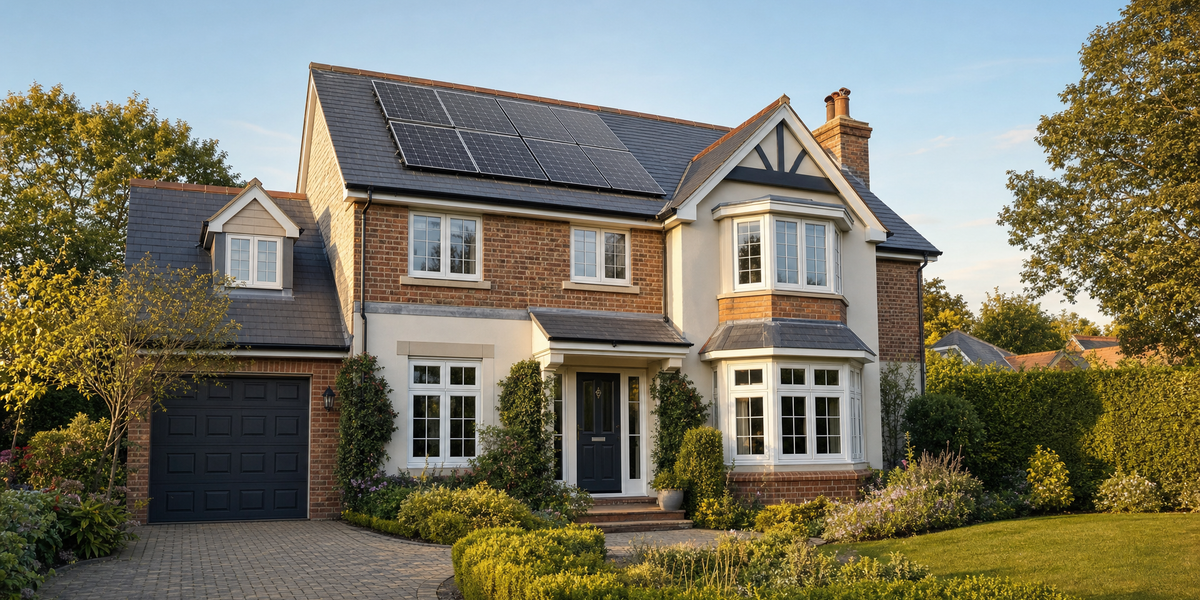
Do Solar Panels Add Value to Your Home in 2026? The UK Evidence
Solar panels have been appearing on UK rooftops at pace for well over a decade, and the question of solar panel property value UK homeowners are likely to see has never been more relevant. With energy bills still a major concern for buyers and sellers alike, the relationship between a solar installation and a property's sale price is becoming harder to ignore. The short answer is yes, solar panels do tend to add value, but the full picture is more nuanced than a simple percentage uplift. Location, system condition, EPC rating and buyer awareness all play a role, and getting those details right matters enormously.
What the UK Research Actually Shows
Several studies have tried to put a number on the value uplift solar panels bring to a UK home. The most commonly cited figure comes from research suggesting an increase of around 4 percent on average, though some analyses have pointed to uplifts as high as 14 percent in specific markets and property types. The variation is wide because the answer genuinely depends on many factors.
The Energy Saving Trust has long highlighted that solar installations improve a property's energy performance rating, and that improved EPC ratings are increasingly linked to stronger sale prices. A home that moves from an EPC band D to a band B or C as a result of solar panels is a meaningfully different proposition for a buyer worried about energy costs.
EPC certificates are publicly searchable, and buyers are using them more actively than ever. Estate agents across the South Coast are reporting that energy efficiency is now one of the first things many buyers ask about, particularly younger purchasers who plan to stay in a property for the long term.
Why Energy Bills Are Driving Buyer Behaviour
The sustained pressure on household energy budgets over the past few years has fundamentally changed the way buyers think about running costs. A home with a working solar system that demonstrably reduces electricity bills is no longer just a green bonus. For a growing number of buyers, it is a practical financial consideration.
Ofgem continues to revise the energy price cap on a quarterly basis, and while prices have eased somewhat from their 2022 peaks, they remain significantly higher than pre-crisis levels. That context makes the appeal of solar obvious. A buyer purchasing a home with a quality solar installation knows their electricity costs will be lower from day one, and that prospect has real monetary value.
For homeowners in Bournemouth, Dorset and across Hampshire, the local sunshine hours make that proposition even stronger. As we cover in detail in our article on why Bournemouth is one of the best places in the UK for solar, the South Coast consistently outperforms the UK average for solar irradiance, meaning systems here generate more electricity and deliver greater savings than equivalent installations further north.
Solar Panel Property Value UK: The Role of EPC Ratings
The Energy Performance Certificate is the single most important document connecting solar panels to property value in the UK market. When a solar installation pushes a home into a higher EPC band, it does two things simultaneously. It reduces the running costs of the property, and it signals to buyers that the home meets a better standard of energy efficiency.
From 2025 onwards, proposed changes to mortgage lending criteria are likely to make EPC ratings even more financially significant. Some lenders are already offering preferential rates on properties rated A or B, and the direction of travel under the government's energy efficiency policy framework is clearly towards rewarding better-rated homes. Solar panels, particularly when combined with battery storage, are one of the most effective ways to achieve a higher EPC band in a typical UK semi-detached or detached home.
For South Coast homeowners thinking about this from a long-term perspective, our piece on the Future Homes Standard and what it means for solar owners in Dorset goes into considerable detail about how regulatory change will continue to shape property values in the years ahead.
Condition Matters More Than You Might Think
Here is where a lot of homeowners get caught out. A solar installation adds value to a property when buyers can see it is working properly, has been maintained, and comes with clear documentation. A neglected system, one with a failing inverter, cracked panels, bird damage or years of accumulated grime, can actually introduce doubt into a sale and complicate conveyancing.
Buyers and their solicitors are increasingly asking for evidence of maintenance and performance data. If you cannot provide it, you are relying on goodwill rather than evidence, and some buyers will simply discount the system entirely when making their offer.
This is one of the most practical reasons to book a Solar MOT before you put your home on the market. The Solar MOT service from No1 Solar Care provides a thorough inspection of your panels, inverter, mounting and electrical connections, along with a written report you can share with buyers and solicitors as proof that the system has been professionally assessed. That piece of paper can be the difference between a buyer valuing your solar installation at full worth or mentally writing it off.
MCS certification for the original installation is also worth locating before you sell, as solicitors frequently request it during conveyancing. If your installer has since gone out of business, it is worth reading our article on what happens when your solar panel installer goes bust to understand what documentation you should still be able to access.
Feed-in Tariff and Smart Export Guarantee Contracts
If your system was installed before April 2019, it is almost certainly registered on the Feed-in Tariff scheme administered by Ofgem. This is a significant financial asset that transfers with the property when you sell, and it is frequently undervalued or overlooked during negotiations.
A FiT contract paying guaranteed export rates for twenty years, potentially with many years still to run, is a genuine income stream that a well-informed buyer should be willing to pay a premium for. The problem is that sellers often fail to present this clearly, and buyers who do not understand the scheme simply ignore it.
For systems installed after April 2019, the Smart Export Guarantee applies instead. SEG payments are less predictable than FiT rates since they are set by suppliers rather than guaranteed by government, but they still represent ongoing income that adds to the financial case for the solar installation. Understanding how to present these figures during a sale can make a real difference to what buyers are willing to offer.
Our detailed guide to Smart Export Guarantee payments and getting the best rate in 2026 is worth reading if you are preparing to sell and want to present your export income in the strongest possible way.
What Buyers on the South Coast Are Looking For
The property market along the South Coast, covering areas like Bournemouth, Poole, Southampton and across into Hampshire and Dorset, has a particular dynamic when it comes to solar. The region attracts a significant proportion of buyers relocating from London and other cities, many of whom are financially sophisticated and already aware of solar's benefits.
That awareness cuts both ways. A well-maintained system in a Bournemouth or Dorset property can be a genuine selling point with these buyers. But a system that looks tired, has no documentation, or cannot be shown to be generating properly is a red flag rather than a green asset.
If you are considering selling within the next year or two, it is worth taking stock of your system's health now. A 60-second solar health check is a good starting point to understand whether your system is performing as it should before you invest further in pre-sale preparation.
Our guide to buying a house with solar panels also gives a clear picture of exactly what informed buyers will be checking, which is useful reading if you want to anticipate their questions and concerns.
Battery Storage and the Emerging Value Premium
One area where the value picture is evolving rapidly is battery storage. Homes with both solar panels and a battery system are beginning to command a premium above those with panels alone, and the gap is likely to widen as energy awareness grows.
A battery system allows the household to use more of its own generated electricity rather than exporting it at lower export rates or importing from the grid at peak times. For a buyer, this represents a more self-sufficient home with lower predictable energy costs. As we explore in our article on solar battery storage in 2026 for South Coast homeowners, the economics of battery storage are improving and buyer interest is growing.
The Solar Energy UK trade body has reported consistent growth in combined solar and storage installations, reflecting both falling battery prices and rising consumer confidence in the technology. If you already have a battery, make sure its condition and capacity are clearly documented when you sell.
Keeping Your System Sale-Ready
The practical takeaway from all of this evidence is straightforward. Solar panels add value to your home in the UK when they are working well, properly documented and clearly presented to buyers. They become a liability, or at least a neutral factor, when they are neglected, undocumented or clearly not performing.
Regular maintenance is the foundation of keeping a system sale-ready. This means annual inspections, prompt attention to any faults, professional cleaning and keeping records of all work carried out. Our complete guide to solar panel maintenance on the South Coast covers the full maintenance picture for homeowners in Bournemouth, Dorset and Hampshire.
For homeowners who have not had their system looked at in a while, the Solar MOT service from No1 Solar Care is the natural place to start. It gives you a clear picture of where your system stands, what if anything needs attention, and provides the kind of professional documentation that makes a real difference during a property sale. You can also explore our thoughts on the true cost of neglecting your solar panels to understand what deferred maintenance actually does to both performance and long-term value.
Solar panels are an asset. Like any asset, they are worth more when they are looked after.
Frequently Asked Questions
Do solar panels increase house value in the UK?
Yes, the evidence suggests solar panels typically add around 4 percent to a UK property's value on average, though uplifts can be higher in some markets. The solar panel property value UK benefit is closely tied to system condition, EPC rating improvement and how clearly the financial benefits are presented to buyers during the sale process.
Will buyers actually pay more for a home with solar panels?
Increasingly, yes. Buyer awareness of energy costs has grown sharply in recent years. Buyers who understand solar are more likely to value a system properly, particularly if it comes with documentation, a strong EPC rating and evidence of recent maintenance or a professional inspection.
Does the age of the solar system affect property value?
It can. An older system that has not been maintained may raise concerns for buyers about remaining panel life and inverter reliability. A system of the same age that has been serviced regularly and comes with inspection records is a much more reassuring proposition. This is one reason a professional Solar MOT before selling is genuinely worthwhile.
Does a Feed-in Tariff contract add to a property's value?
A FiT contract is a real financial asset that transfers with the property. If your system is registered on the scheme and has several years of guaranteed payments remaining, this income stream should be clearly documented and presented to buyers. Many sellers undervalue or fail to mention this, leaving money on the table during negotiations.
What happens to solar panel value if the installer has gone bust?
The system itself retains value, but missing documentation can complicate conveyancing. You should still be able to access your MCS certificate through the central registry. Our article on what to do when your solar installer goes bust explains how to locate paperwork and protect your position during a sale.
Do solar panels affect a home's EPC rating?
Yes, solar panels can significantly improve an EPC rating, sometimes by one or two full bands. A better EPC rating not only increases property value directly but may also affect a buyer's mortgage eligibility as lenders increasingly factor energy efficiency into their lending criteria. The EPC register is publicly searchable and buyers do check it.
How can I make sure my solar panels add maximum value when I sell?
The most important steps are maintaining the system regularly, getting a professional inspection before listing, gathering all documentation including MCS certificates and export tariff contracts, and ensuring your EPC reflects the solar installation accurately. Take our 60-second solar health check as a first step, then book a full inspection if your system needs attention.
Book your Solar MOT today. Call 01202 023069 or visit no1solarcare.co.uk/solar-mot