The True Cost of Neglecting Your Solar Panels: A UK Data Analysis
Most solar panel owners assume that because the lights are still on and the inverter is still flashing green, everything is fine. The reality is quite different. The cost of neglecting solar panels adds up quietly, month after month, and by the time most homeowners notice something is wrong, they're already hundreds or even thousands of pounds out of pocket. This article pulls together real UK data to show you exactly what that neglect looks like in financial terms, and what South Coast homeowners in particular are risking by skipping routine maintenance.
Why Solar Panels Don't Maintain Themselves
There's a persistent myth in the solar industry that panels are essentially fit-and-forget technology. Manufacturers do their best to encourage this idea because it simplifies the sales conversation. But panels are exposed to the elements every single day of the year, and the UK's climate is not especially kind to them.
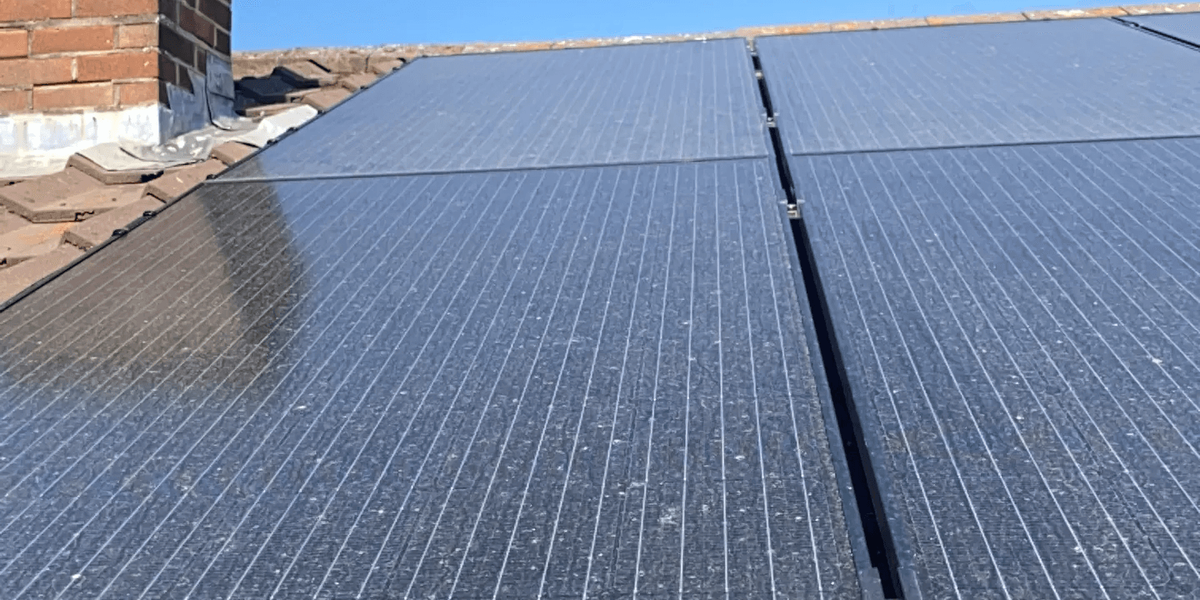
Dirt, moss, lichen, bird droppings, salt residue and general atmospheric grime all accumulate on panel surfaces over time. Each of these reduces the amount of light reaching the photovoltaic cells. Studies carried out across European climates similar to the UK's have found that soiling alone can reduce panel output by between 5% and 25% depending on location and time since last cleaning. For a typical 4kWp domestic system generating around 3,400 kWh per year, a 15% reduction means you're losing roughly 510 kWh annually. At current electricity rates, that's a meaningful chunk of money gone silently every year.
Beyond surface soiling, there are electrical and structural issues that develop unseen. Microcracks in cells, degraded junction boxes, loose mounting hardware and failing DC isolators don't announce themselves. They just quietly erode your system's performance and, in some cases, create genuine safety hazards.
The Real Financial Cost of Neglecting Solar Panels
Let's look at this in concrete terms. A well-maintained 4kWp system on the South Coast, in an area like Bournemouth or Poole where sunshine hours are above the UK average, should be generating comfortably over 3,400 kWh per year. If that system is underperforming by 20% due to a combination of soiling, degraded components and minor faults, the owner is losing around 680 kWh of generation annually.
At a blended rate that accounts for self-consumption savings and Smart Export Guarantee export payments, that 680 kWh loss likely represents somewhere between £150 and £250 per year in real financial terms depending on household usage patterns. Over five years without professional attention, that's potentially over £1,000 in lost value, and that figure doesn't include the repair costs that tend to follow long periods of neglect.
If you're interested in how export payment rates affect this calculation, the article on Smart Export Guarantee payments and getting the best rate covers this in detail.
The bigger financial hit often comes when a fault that could have been caught early is left to develop. A failed bypass diode might cost £80 to £150 to fix if spotted during a routine inspection. Left unaddressed, it can cause hotspot damage to the affected panel, potentially writing it off entirely. Replacement panels for systems installed five or more years ago can be difficult to source and expensive to match, sometimes costing £400 to £600 per panel once you factor in labour. For a thorough breakdown of what different repairs actually cost, this guide to solar panel repair costs on the South Coast is worth reading before you're ever in that position.
The Coastal Factor: Why South Coast Homes Face Greater Risk
Homeowners in Bournemouth, Christchurch, Weymouth, Southampton and across the Hampshire and Dorset coastlines face a specific additional challenge that inland owners don't. Salt-laden air accelerates corrosion of aluminium frames, mounting hardware and electrical connections in ways that aren't visible until significant damage has already occurred.
Salt deposits on panel glass also create a particularly stubborn form of soiling that doesn't wash off with rain in the way that ordinary dust does. Rain on the South Coast often carries its own salt content, which means the self-cleaning effect that manufacturers sometimes reference is significantly reduced compared to inland locations.
The article on how salt air damages solar panels on the South Coast goes into the mechanics of this in detail, but the short version is that coastal systems need more frequent professional attention, not less. Ignoring this reality is one of the most common and costly mistakes we see among new solar panel owners along the Dorset and Hampshire shoreline.
What Happens to Your Warranty When You Skip Maintenance
This is the part that tends to surprise people most. Most solar panel manufacturers offer performance warranties of 25 years and product warranties of 10 to 12 years. What many owners don't read carefully is the maintenance clause buried in those warranty documents.
The majority of manufacturer warranties require that the system is serviced and maintained in accordance with their guidelines. If you make a warranty claim for a failed panel or degraded performance and the manufacturer's assessor determines that the system has not been properly maintained, they are within their rights to reject the claim entirely. Given that a full panel replacement for a 10-panel system could run to several thousand pounds, losing warranty protection because you skipped a few annual inspections is an expensive lesson.
[MCS certification](https://mcscertified.com) standards, which govern most professionally installed UK solar systems, also assume ongoing maintenance as part of responsible system ownership. Keeping records of professional inspections protects you if a warranty dispute ever arises.
Inverter Failure: The Most Expensive Consequence of Neglect
The inverter is the most technically complex and most failure-prone component in any solar installation. A string inverter for a typical domestic system costs between £800 and £1,500 to replace, and that's before installation labour. Hybrid inverters and battery-ready models cost considerably more.
Inverters fail for a variety of reasons, but many of the most common causes are linked to conditions that a routine inspection would catch. Poor ventilation around the unit, moisture ingress from damaged cabling, and sustained overloading from a system that's been modified without proper assessment all shorten inverter lifespan significantly.
The average lifespan of a solar inverter in the UK is around 10 to 15 years. Systems that receive regular professional attention tend to reach the upper end of that range. Systems that don't often see failures at 7 to 9 years, which means two inverter replacements over the life of the panels rather than one. If you're already seeing unusual inverter behaviour, this troubleshooting guide for solar panel inverter problems covers the most common causes and what they typically cost to resolve.
The Silent Loss: How Much Energy Are You Actually Missing?
One of the most insidious aspects of solar panel degradation is how gradual it is. Your system doesn't suddenly drop to half output overnight. It loses half a percent here, a percent there, until you're running at 80% of what you should be and it still looks more or less normal on your monitoring app.
This is especially common for systems installed before 2018, when monitoring technology was less sophisticated and many homeowners have no reliable baseline to compare against. If you're unsure whether your system is actually performing as it should, the 60-second solar health check on our website gives you an immediate sense of whether there's a problem worth investigating.
For older systems still operating under the Feed-in Tariff scheme, the stakes are particularly high because tariff payments are fixed regardless of how much you export. Any reduction in generation directly reduces the self-consumption savings you're making, with no tariff top-up to offset the loss. The article on maintaining Feed-in Tariff legacy systems in 2026 looks at this in more detail.
What a Solar MOT Actually Catches
No1 Solar Care's Solar MOT service is designed specifically to identify the kinds of faults and performance issues that owners cannot spot themselves. A thorough professional inspection covers panel-by-panel performance testing, electrical safety checks on the DC and AC wiring, insulation resistance and earth continuity testing, inverter diagnostics and error log review, mounting structure assessment and a full generation report.
For homeowners across Bournemouth and the wider South Coast, this kind of inspection typically uncovers at least one issue that the owner was completely unaware of. In many cases it's minor, something that can be corrected on the spot. But in a meaningful proportion of visits, the inspection catches something that would have developed into a significant and expensive problem within the next 12 to 18 months.
The cost of our Solar MOT is a fraction of what a single failed panel or inverter replacement costs. When you factor in the generation losses that inspection and cleaning typically recover, many customers find the service pays for itself within the first year simply through improved output.
For a broader look at what professional maintenance involves and what it typically costs across different service types, the article on solar panel maintenance costs for UK homeowners gives a useful overview.
How to Tell If Your System Has Already Been Affected
There are some signs that your system may already be suffering from the effects of neglect. Generation that falls noticeably short of what similar systems in your area are producing is the clearest indicator. If you're in Dorset or Hampshire and your 4kWp system is producing significantly less than 3,200 kWh in a decent year, something is likely wrong.
Visible panel discolouration, yellowing around cell edges, or dark spots on the panel surface are signs of cell damage or hotspot development. Moss or heavy soiling across more than a quarter of any panel's surface is enough to cause measurable output reduction. Inverter error codes, even occasional ones that reset themselves, should always be investigated rather than ignored.
If any of these symptoms sound familiar, this article on why solar panels stop generating enough power walks through the nine most common causes and how each one is typically resolved.
Rising energy costs make every kWh your system produces more valuable than it was when you first had your panels installed. The financial case for keeping your system in peak condition has never been stronger, and the cost of doing nothing continues to compound every month you wait.
Frequently Asked Questions
What is the real cost of neglecting solar panels over five years?
The cost of neglecting solar panels over five years typically combines accumulated energy losses, avoidable repairs and potential warranty voidance. For a standard South Coast 4kWp system, energy losses alone from soiling and minor faults can amount to £750 to £1,200 over five years, not counting the cost of any repairs required.
How often should solar panels be professionally inspected?
Most solar industry guidance and manufacturer warranties recommend a professional inspection at least once a year. For homes on the South Coast of England, including properties in Bournemouth, Poole and along the Dorset coast, annual inspections are especially important given the additional wear from salt air and coastal weather conditions.
Can solar panels lose efficiency without showing obvious signs?
Yes, and this is one of the most common issues we encounter. Gradual efficiency loss from microcracks, soiling or degraded connections rarely triggers any visible alarm. Many homeowners discover their system has been running at 75% to 85% of its potential for years simply because nothing appeared obviously wrong to the naked eye.
Does neglecting maintenance affect my solar panel warranty?
It can, and often does. Most manufacturer warranties include a maintenance requirement. If you make a claim and the manufacturer determines the system was not properly maintained, they may reject it. Keeping records of annual professional inspections is the most straightforward way to protect your warranty rights throughout the life of your system.
What does a Solar MOT from No1 Solar Care include?
The Solar MOT service from No1 Solar Care covers a full panel performance assessment, insulation resistance and earth continuity testing, inverter diagnostics, electrical safety checks and a written generation report. It is designed to identify both current faults and developing issues before they become costly problems for homeowners across the South Coast and South Wales.
Are coastal solar panels more at risk from neglect?
Significantly so. Homes along the South Coast, including those in Bournemouth, Christchurch, Lymington and across Hampshire and Dorset, are exposed to salt-laden air that accelerates corrosion of frames, connectors and mounting hardware. Salt deposits on panels also resist rain cleaning far more than ordinary dust, meaning output losses accumulate faster without professional intervention.
How do I know if my solar panels are underperforming right now?
The quickest way is to compare your actual annual generation against the expected output for your system size and location. You can also use the 60-second solar health check on our website for an immediate indication. Persistent inverter warnings, visible panel discolouration or generation that's dropped year on year are all signs that a professional inspection is overdue.
Book your Solar MOT today. Call 01202 023069 or visit no1solarcare.co.uk/solar-mot