Future Homes Standard 2025: What It Means for Solar Panel Owners in Dorset
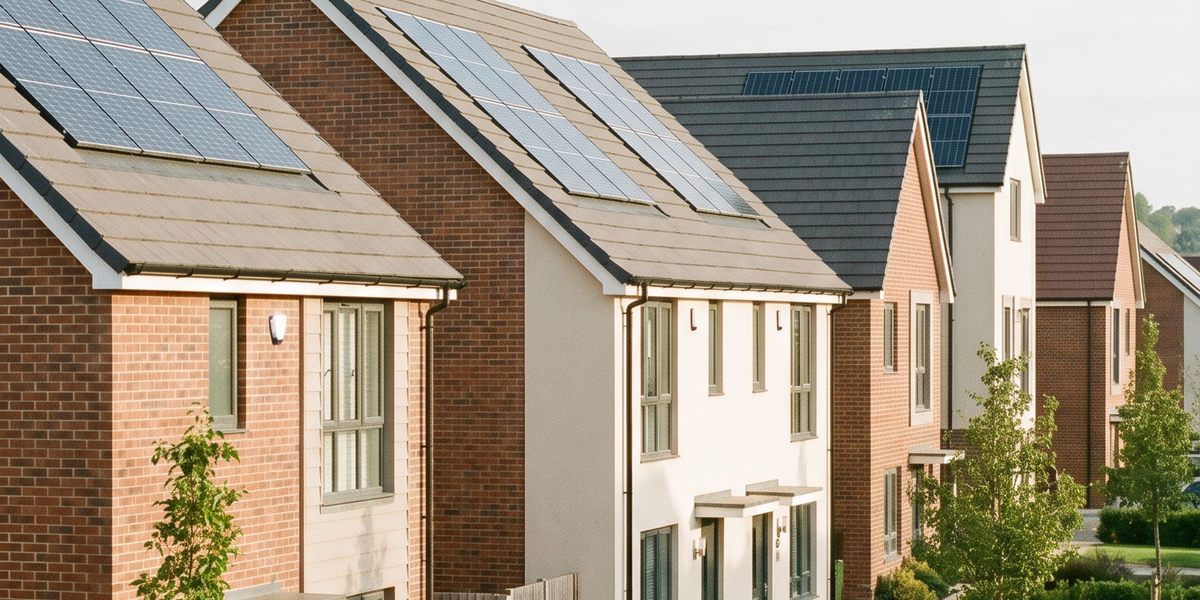
The Future Homes Standard solar 2025 changes are something every homeowner with panels on their roof should understand, not just those buying new builds. Set to come into full effect in 2025, the Future Homes Standard is a government-backed building regulation that requires all new homes in England to be built with low-carbon heating and high levels of energy efficiency. Solar photovoltaic panels are expected to be a default feature in the vast majority of new builds as a result, and that shift has knock-on effects for the wider property market, energy pricing, and how existing solar installations are valued and maintained.
For homeowners across Dorset, Bournemouth, and the wider South Coast, the standard represents both an opportunity and a prompt to take stock of what they already have. If your panels were installed five or more years ago, they may not be performing anywhere near their original specification, and with more solar homes entering the market, buyers and surveyors are going to be increasingly savvy about what a well-maintained system looks like versus a neglected one.
How the Future Homes Standard Changes the Solar Picture
The regulation requires new homes to produce around 75 to 80 percent fewer carbon emissions than those built to current standards. Solar PV is the most straightforward way for developers to hit those targets, which means Dorset and Hampshire will see a significant rise in the number of solar-equipped homes over the next few years.
That's genuinely good news for the grid, for carbon reduction targets, and for local homeowners who want to sell in a market that increasingly treats solar as standard rather than a bonus feature. But it also raises the bar. When solar becomes commonplace, the condition and output of a system starts to matter more, not less. A poorly maintained array on a five-year-old South Coast property is going to compare unfavourably with a brand-new compliant installation next door.
What Counts as Compliant Under the New Rules
The Future Homes Standard doesn't directly regulate existing homes, which is an important distinction. It applies to new builds receiving planning permission from 2025 onwards. However, local councils across Dorset, including Bournemouth, Christchurch and Poole Council, are already tightening their own planning policies ahead of the national standard, and retrofit guidance is being updated to align with it.
For existing solar panel owners, the practical impact is indirect but real. Energy Performance Certificate assessors are increasingly factoring in panel condition and verified output when rating properties. A solar system that hasn't been serviced or inspected can actually drag down an EPC rating if it's recorded as non-functional or significantly underperforming.
The Role of Solar Maintenance in Meeting New Standards
New homes built to the Future Homes Standard will have systems installed by accredited contractors with full documentation, commissioning certificates, and manufacturer warranties in place. If you're an existing homeowner and your paperwork is incomplete, your system hasn't been cleaned in years, or you've never had a professional inspection, you are essentially behind where the market expects you to be.
This is precisely where a Solar MOT becomes genuinely useful. No1 Solar Care's Solar MOT is a thorough health check of your entire solar PV system. It covers panel condition, inverter performance, cabling integrity, mounting security, and output verification. For homeowners across Dorset and the South Coast, it's a practical way to know exactly where your system stands before any sale, retrofit, or upgrade.
Future Homes Standard Solar 2025: The South Coast Context
Dorset and Hampshire are well-positioned to benefit from the shift towards mandatory solar in new builds. The South Coast receives some of the highest levels of solar irradiance in England, with areas around Bournemouth, Poole, and Christchurch regularly topping national sunshine hour statistics. That makes solar a genuinely productive investment here, not just a compliance checkbox.
According to data from the Microgeneration Certification Scheme, the South East and South Coast regions consistently account for a disproportionate share of domestic solar installations relative to population size. Dorset alone has seen a steady increase in registered systems year on year, and that trend is expected to accelerate as the Future Homes Standard brings more new-build solar online from 2025.
With that growth comes a greater need for qualified, local maintenance specialists who understand both the technical side of solar PV and the specific planning and regulatory environment in this part of England. Not all solar maintenance firms are equal, and national call-centre operations often lack the regional knowledge to give homeowners here genuinely relevant advice.
What Existing Solar Owners Should Do Before 2025
If you've had panels on your roof for three years or more, this is a sensible time to take action rather than wait. There are a few practical steps worth taking.
First, find your original installation paperwork. This includes your MCS certificate, your DNO notification, your feed-in tariff or Smart Export Guarantee registration documents, and any warranty information from your panel and inverter manufacturers. If any of this is missing, it can often be retrieved or reconstructed, but it takes time.
Second, get a professional inspection done. Even if your system appears to be working fine, visual checks from the ground tell you very little about what's actually happening at panel level. Micro-cracks, potential-induced degradation, inverter faults, and loose connections are all common issues that don't show up until you do a proper assessment. Our free 60-second solar health check is a useful starting point if you're not sure where to begin.
No1 Solar Care's Solar MOT is specifically designed for exactly this kind of situation. The inspection gives you a written report you can use for insurance purposes, EPC assessments, or simply your own peace of mind. For Bournemouth and Dorset homeowners thinking about the implications of the Future Homes Standard, it's a logical starting point.
Cleaning and Output: The Numbers That Matter
Solar panels in the South Coast environment are exposed to sea salt, gull droppings, lichen, and general airborne pollution. Industry data suggests that dirty panels can lose between 15 and 25 percent of their output depending on the level of soiling and the tilt angle of the array. On a 4kW system in Dorset, that could mean losing several hundred kilowatt hours per year, which translates directly to lower export earnings and higher electricity bills.
Professional cleaning using purified water and the right equipment restores output without risking panel damage. It also allows a trained technician to spot physical issues at close range that wouldn't be visible from ground level. Combining a clean with a Solar MOT inspection is the most efficient way to bring a system back up to the standard it should be performing at.
Inverter Age and Replacement Considerations
One area the Future Homes Standard indirectly highlights is inverter technology. String inverters installed in systems from 2010 to 2018 are now reaching or approaching the end of their typical lifespan, which is generally around 10 to 15 years. New-build systems installed under the Future Homes Standard will use modern hybrid inverters or microinverters with significantly better monitoring capabilities and longer warranties.
If your inverter is more than ten years old, it's worth having it assessed. A failing inverter doesn't always throw an error code. It can simply underperform quietly, reducing your system's output without triggering any obvious alarm. An inspection as part of a Solar MOT will flag inverter issues and give you a clear picture of whether a replacement makes financial sense.
How the Future Homes Standard Affects Property Values in Dorset
There is growing evidence that solar panels add measurable value to residential properties. Industry research has suggested that solar PV can add a meaningful percentage to a property's value, depending on system size, condition, and local market conditions. In a competitive market like Bournemouth and the surrounding Dorset coast, that's a meaningful figure.
But the caveat is condition. A solar system that hasn't been maintained, that has a worn-out inverter, or that has never had a professional inspection may not add value at all. Surveyors and mortgage lenders are becoming more rigorous in how they assess solar installations, particularly as the Future Homes Standard raises the baseline expectation of what a properly functioning solar home looks like.
For homeowners on the South Coast who are thinking about selling in the next two to five years, getting ahead of this now makes practical sense. A system that's been professionally assessed, cleaned, and certified is a marketing asset. One that hasn't is a potential negotiating chip for a buyer's solicitor.
No1 Solar Care: Helping Dorset Homeowners Stay Ahead
Based in Bournemouth and serving the full length of the South Coast, No1 Solar Care works with homeowners who want to get the most out of their existing solar investment. The team understands the local environment, the planning context, and the technical side of residential solar PV in a way that generalist maintenance firms simply don't.
The Solar MOT service is the company's most popular offering, and it's directly relevant to everything discussed in this article. Whether you're trying to understand your system's current performance, preparing for a property sale, or simply making sure your investment is protected as the regulatory environment changes, a Solar MOT gives you the information you need to make sensible decisions.
The Future Homes Standard isn't a reason to panic, but it is a reason to be proactive. Homeowners across Dorset and Hampshire who take care of their systems now will be in a much stronger position as the new-build solar market grows and buyer expectations shift accordingly.
Frequently Asked Questions
What does the Future Homes Standard solar 2025 mean for people who already have panels?
The Future Homes Standard applies to new builds, not existing homes. However, it raises the general expectation around what a functioning solar system looks like. Existing homeowners across Dorset and the South Coast should take it as an opportunity to review their system's condition, update their documentation, and consider a professional inspection to make sure they're not falling behind the standard buyers will increasingly expect.
Do I need to upgrade my solar panels to comply with the Future Homes Standard?
No, you don't. The regulation covers new construction only. That said, if your system is more than five years old and hasn't been serviced, it's likely underperforming. A Solar MOT from No1 Solar Care will tell you exactly where your system stands and whether any upgrades or repairs would improve its performance and longevity.
Will the Future Homes Standard affect my property's EPC rating in Bournemouth or Dorset?
Not directly, but EPC methodology is evolving alongside the new standards. As solar becomes more common in new builds, assessors will have better benchmarks for what a well-performing system looks like. If your panels are dirty, faulty, or unverified, this can negatively affect how they are recorded on your EPC, which could impact mortgage lending and resale value.
How often should I get my solar panels inspected?
A professional inspection every two to three years is a sensible minimum, with annual cleaning recommended for South Coast properties due to exposure to sea salt and bird activity. If your system is approaching or past ten years old, or if you've noticed a drop in your generation figures, an inspection should be prioritised. Our Solar MOT covers everything in a single visit.
What does the No1 Solar Care Solar MOT actually include?
The Solar MOT includes a full visual inspection of all panels, inverter performance testing, cabling and earthing checks, mounting and fixings assessment, and a written report on system condition and output. It's designed to give Dorset and South Coast homeowners a clear, honest picture of how their system is performing and what, if anything, needs attention.
Is solar worth installing if the Future Homes Standard is making it standard in new builds?
Absolutely. The Future Homes Standard reflects the growing consensus that solar is one of the most cost-effective ways to reduce energy bills and carbon emissions. For existing homeowners in Dorset and Hampshire, a well-maintained solar system continues to deliver strong returns through reduced electricity costs and Smart Export Guarantee payments, regardless of what's happening in the new-build market.
How does the South Coast's climate affect solar panel maintenance needs?
The South Coast gets excellent sunshine hours, which is great for output, but the coastal environment brings additional maintenance challenges. Salt air accelerates corrosion on fixings and connectors, and coastal birds are particularly active, leading to more soiling than inland locations. For Bournemouth and Dorset homeowners specifically, regular cleaning and inspection is more important than the national average guidance might suggest.
Book your Solar MOT today. Call 01202 023069 or visit no1solarcare.co.uk/solar-mot