How Long Do Solar Panels Last in the UK?
Last updated: 3 September 2026 | 11 min read | By No1 Solar Care
A homeowner in Ferndown called us in July about a system fitted in 2012. Fourteen summers on the roof, never touched since the day the scaffolding came down. She wanted to know whether the panels were "about to go". They were not. The panels were fine — a little tired, still producing what you would expect of glass that age. The inverter was the problem, and it had been quietly the problem for about two years.
That gap between what people worry about and what actually breaks is the whole subject of this article.
Solar panels are the most reliable part of a solar system by a distance. They are also the part everyone asks about. Meanwhile the components that genuinely wear out — inverter, isolators, terminations, mounting hardware — get almost no attention until something stops.
In summary: Solar panels in the UK last 25 to 30 years and often longer, losing roughly 0.5% of their output each year. They rarely fail outright. The inverter is the first thing to go, usually between year 10 and year 15, and it is the single most common reason a 25-year system stops earning its keep.
How long do solar panels actually last?
A modern crystalline silicon panel has a working life of 25 to 30 years, and many panels installed in the UK during the 2011 to 2015 boom are still producing well past their fifteenth summer. Manufacturers back this with a performance warranty, typically guaranteeing 80% to 87% of original output at year 25.
The number that matters is not lifespan but degradation rate. Panels do not run at full power for 25 years and then switch off. They fade. The National Renewable Energy Laboratory has pooled thousands of field studies and lands on a median degradation of about 0.5% per year for tier-one modules, which puts a panel at roughly 87% to 88% of its original output after 25 years.
Applied to a real system: a 4kW array that produced 3,600 kWh in its first year should still produce around 3,150 kWh in year 25. That is a loss you would struggle to notice month to month. It is nothing like the drop you get from a dirty array or a failing inverter, which is why "my panels must be worn out" is almost never the right diagnosis on a system under twenty years old.
Panels sold in the UK are tested to IEC 61215, the international standard covering thermal cycling, humidity, mechanical load and UV exposure. It is a genuinely brutal test regime. It is also the reason outright panel failure is rare enough that we treat it as a notable finding when we see one.
What does solar panel degradation actually mean?
Degradation is the gradual loss of a panel's ability to convert light into electricity, caused by microscopic changes in the silicon and the encapsulant over years of heat, cold and ultraviolet light. It is slow, predictable, and largely unavoidable. It is not a fault, and no amount of maintenance stops it. Two things drive it: a small one-off light-induced drop of 1% to 3% in the first few months as the cells stabilise, and the long slow burn of thermal cycling. For the full picture, including how the rate varies by panel type and how to measure yours, see our guide to solar panel degradation rates.
What maintenance does change is everything sitting on top of that curve. Soiling, shading, hot spots, corroded connections and a failing inverter are all recoverable losses. Degradation is the floor. Everything else is the gap between the floor and where your system is actually running, and on a neglected array that gap is often far wider than the degradation itself.
Do solar panels stop working after 25 years?
No. A 25-year performance warranty is a commercial guarantee about output, not a shutdown date. Panels that reach year 25 in good condition typically carry on for another five to ten years at slowly declining output, and there is no mechanism inside a panel that makes it stop at a particular birthday.
This trips people up constantly, usually when they are buying a house. The survey says "solar installed 2011" and the buyer assumes they are inheriting something with three years left. They are not. They are inheriting glass that is fine and an inverter that is on borrowed time, and those are two very different financial problems.
Panels from the early UK boom are only now reaching the age where anyone has real long-term field data on them. What that data shows is unglamorous: the glass keeps working, and the electronics do not.
Which part of a solar system fails first?
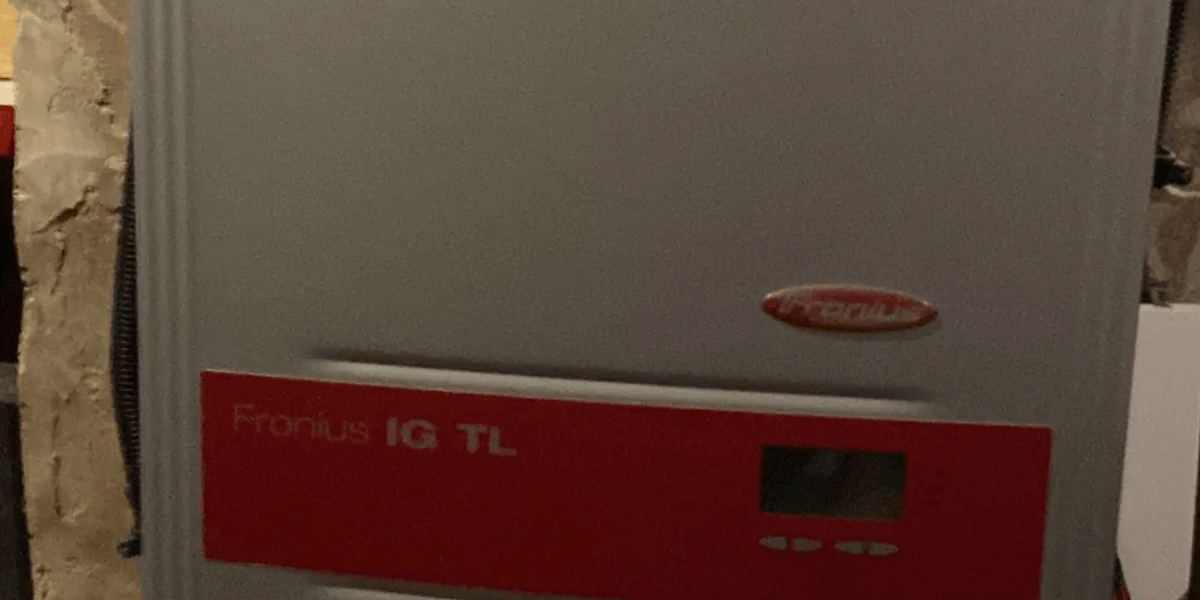
The inverter, almost always. Inverters are packed with capacitors, cooling fans and switching electronics that live outdoors or in an unheated loft, and they typically last 10 to 15 years against the panels' 25 to 30. If your system is over ten years old and producing less than it should, look at the inverter before you look at the roof.
No1 Solar Care's own figure — published on our site and drawn from across the industry — is that around one inverter in three fails before year 15. What makes this expensive is that inverter failure is frequently silent. Efficiency drops 10% to 15% with no error code, no alarm, no red light. The system still works. It just works worse, and the only signal reaching the homeowner is a slightly larger electricity bill that gets blamed on the price cap.
Here is the honest version of what we do and do not know: we can tell you an inverter is underperforming from its own diagnostics and a live generation test in an afternoon. We cannot tell you from the ground. Neither can you. That is the entire argument for a physical inspection, and it is not a sophisticated one.
How long does each part of a solar system last?
Different components, wildly different lifespans. The list below is what we work to when we assess a system's remaining life.
Costs above are indicative UK figures for a domestic system and will move with your specific kit and roof access. We quote from the actual system.
The key takeaway: your panels will almost certainly outlive your inverter by a decade or more, so the question is never "when do I replace my solar panels" but "when does the box on the wall need dealing with, and will I notice before it costs me a year of generation".
What makes solar panels wear out faster in the UK?
Environment does most of it, and the two regions we work in punish systems in completely different ways. A Poole roof and a Cardiff roof both age, but not from the same causes.
On the South Coast — Bournemouth, Poole, Christchurch, Southampton — the enemies are salt and gulls. Airborne salt accelerates corrosion on mounting hardware, earth bonding and any exposed terminal, and it works fastest on the properties closest to the water. Herring gulls and lesser black-backed gulls nest in the 100mm gap under an array, block the airflow the panels need to run cool, and leave guano that sets hard on fixings and cabling. Bird proofing mesh is a South Coast job in a way it simply is not further inland.
In South Wales the problem is water and what grows in it. Cardiff is the wettest major city in the UK, with Met Office long-term averages around 1,070mm to 1,150mm of rain a year against a UK city average nearer 800mm. Persistent damp plus mild winters means moss and lichen on roof tiles, and moss creeps onto panel edges from the tiles rather than landing on the glass. A band of moss along the bottom edge of a panel shades a whole row of cells and triggers hot spotting, which does cause permanent damage. Add Valleys-side properties with heavy shading, Cardiff and Swansea urban particulates, and Bristol Channel exposure at Penarth and Porthcawl, and the maintenance profile looks nothing like Dorset's.
One thing we see on maybe one roof in five and cannot fully explain: two identical arrays, same install date, same orientation, one shows visible frame corrosion and the other does not. Micro-climate, drainage off a neighbouring roof, something. We flag it and monitor it rather than pretending we know.
How do you know if your solar panels are degrading faster than they should?
Compare this year's generation against your first full year, adjusted for weather. If output has fallen more than about 1% per year on average, something other than normal degradation is happening — soiling, shading, a failing inverter or a dead string. Degradation alone will not produce a double-digit drop.
Most homeowners have no idea what their first-year figure was, which is the practical problem. If you have a monitoring portal, the historical data is usually in there. If you have the original MCS certificate, it will carry an estimated annual generation figure you can measure against. If you have neither, an engineer can establish a baseline from system size, orientation and pitch in about twenty minutes.
Warning signs worth acting on: a monitoring app that has stopped reporting, an inverter display showing a fault code you have learned to ignore, visible moss or droppings on the array, a noticeably higher electricity bill in a summer that was not noticeably duller, or any system over ten years old that has never been inspected. That last one is more common than it should be. Of the last 137 homeowners who told us when their system was last serviced, 99 said never — just under three quarters.
When should you replace solar panels instead of repairing them?
Almost never, on a system under 20 years old. Individual panels can be replaced, inverters can be swapped, isolators and cabling can be renewed. Full array replacement makes sense only when panels are physically damaged across the array, when the mounting system is unsafe, or when you are re-roofing anyway and it is cheaper to combine the jobs.
The exception worth taking seriously is capacity. A 2011 system is often 2kW to 3kW on panels rated 230W to 250W each. Modern panels run 400W to 450W in the same physical footprint. If you have since added an EV, a heat pump or a battery, replacing a small old array with a larger new one can make sense on generation grounds even though the old panels are working — and with 0% VAT on domestic solar until March 2027, the timing is better now than it will be in 2027.
That is a genuine decision with a real answer either way, and it is worth getting someone on the roof before you make it. Please do not go up yourself to check.
What should a 15-year-old solar system have done to it?
The UK's Feed-in Tariff boom ran roughly 2011 to 2015, which means several hundred thousand domestic systems are passing 12 to 15 years old right now. That is precisely the window where inverters fail, isolators let water in, and terminations that were fine at handover start to loosen.
For a system of that age we would want: a full electrical test with termination tightness checked, inverter diagnostics and error log pulled, DC isolator condition assessed, live generation measured against expected output, mounting and fixings inspected, and the MCS and G98/G99 paperwork located while you still can. That is most of our 21-point Solar MOT, which is the format we use precisely because these systems all need the same things checked.
FiT payments run for 20 years from commissioning. A 2012 system still has around six years of index-linked payments left, and those payments are based on what it generates. An inverter running 15% down for two unnoticed years is not an abstract loss.
Find out what your system has left
If your solar has been up more than five years and nobody has been on the roof since the installer left, a 21-point Solar MOT from £195 will tell you what condition it is actually in. MCS-certified engineers, written report and traffic-light grading the same day, usually within the week.
South Coast (Bournemouth, Poole, Christchurch, Southampton, Dorset and Hampshire): 01202 023069
South Wales (Cardiff, Newport, Swansea and surrounding): 029 2002 6002
Check your system in 60 seconds → no1solarcare.co.uk/check
We install and we maintain, which means the engineers who fit systems are the same ones who come back to service them. Most customers move onto a care plan after their MOT — Care Plus at £29.99 a month includes an annual engineer visit and full electrical test, and it is the plan most FiT-era systems end up on.
Frequently asked questions
How long do solar panels last in the UK?
Twenty-five to thirty years, and often longer. UK panels are tested to IEC 61215 for thermal cycling, humidity and mechanical load. They lose roughly 0.5% of output per year rather than failing outright, so a 25-year-old panel typically still produces around 87% of what it did when new.
Do solar panels stop working after 25 years?
No. The 25-year figure is a manufacturer performance warranty, not an expiry date. Panels in good condition usually continue for another five to ten years at gradually reducing output. What tends to stop first is the inverter, which has a working life of 10 to 15 years.
How often do solar inverters need replacing?
Most string inverters last 10 to 15 years, so expect one replacement within a panel's lifetime. Around one inverter in three fails before year 15, frequently without an error code. Replacement typically runs £800 to £1,800 fitted, depending on system size and inverter type.
Does solar panel maintenance extend their lifespan?
It does not slow the underlying degradation rate, which is fixed by physics. What it does is remove everything sitting on top of it — soiling, moss, hot spots, loose terminations and unnoticed inverter faults. On a neglected system those recoverable losses are usually far larger than degradation itself.
How do I know if my solar panels are underperforming?
Compare current annual generation with your first full year, or with the estimated figure on your MCS certificate. A drop of more than about 1% per year on average points to a fault rather than normal ageing. An engineer can measure live output against expected in a single visit.
Is it worth replacing old solar panels with new ones?
Only in specific cases: physical damage across the array, an unsafe mounting system, a planned re-roof, or wanting significantly more capacity. A 2011 array of 250W panels can be replaced with 450W panels in the same roof space, which is worth costing if you have added an EV, heat pump or battery.
How long do solar batteries last?
Domestic lithium batteries typically last 10 to 15 years before capacity fades below around 70% of original. Most carry a 10-year warranty with a stated end-of-warranty capacity. Batteries are covered within our care plans alongside the PV system.
Do coastal conditions shorten solar panel lifespan?
Salt air accelerates corrosion on mounting hardware, earth bonding and exposed terminals rather than attacking the panels themselves. On South Coast properties close to the water we check corrosion specifically as part of the 21-point inspection. Gull nesting under the array is the more common coastal problem.
Your panels will probably still be working in 2050. The inverter will not, the isolators will not, and the fixings holding the array to your roof will need looking at long before then. Knowing which of those clocks is closest to running out is worth an afternoon of an engineer's time.